Personalized Medical Care & Dedicated International Patient Concierge
Medical Guide
Autologous Cartilage Rhinoplasty In Seoul Baroko Surgery
Discover why autologous cartilage rhinoplasty is the gold standard for natural results. Learn about Dr Jun Kim implant free technique at Baroko. Book now.
Schedule a Consultation
Autologous Cartilage Rhinoplasty Natural Safe Approach Explained
Many patients in New York and Los Angeles worry that a nose job will leave them looking overdone or result in long term implant complications. The fear of a synthetic and stiff appearance often prevents people from achieving the facial harmony they desire. Traditional methods often rely on foreign materials that might not age well with the rest of the face. If you are seeking a refined nasal shape without synthetic materials, autologous cartilage rhinoplasty offers a biocompatible solution that prioritizes your health and your natural beauty. This approach uses your own tissue to reshape the nose, ensuring that the final result looks and feels like a part of you.
The traditional use of silicone or Gore Tex implants carries risks of extrusion and infection and an artificial look. For active individuals, the concern about a fragile nose is a significant barrier to surgery. Many people want a result that can withstand the test of time and physical activity without the constant worry of an implant shifting or causing skin thinning. This is where the advanced method of autologous cartilage rhinoplasty becomes the preferred choice for discerning patients who want the best for their bodies.
By the end of this guide, you will understand:
- Why autologous cartilage rhinoplasty is the safest and most natural option for your body.
- How Dr Jun Kim uses your own tissue to create a durable and beautiful nasal structure.
- The advanced 3D CT diagnostics that ensure functional health and breathing are never sacrificed for beauty.
- What the international patient journey from the USA to Seoul looks like.
As a board certified ENT specialist at Baroko Plastic Surgery who has performed over two hundred specialized rhinoplasty procedures annually for two decades, Dr Jun Kim combines medical necessity with aesthetic artistry. His approach focuses on the unique anatomy of each patient, ensuring that every autologous cartilage rhinoplasty result is as functional as it is beautiful.
The Evolution Of Autologous Cartilage Rhinoplasty
The world of nasal surgery has undergone a massive transformation over the last few decades. In the past, the primary goal was often just to change the shape of the nose regardless of the materials used. This led to a heavy reliance on synthetic implants which often caused problems years down the line. Today, the focus has shifted toward autologous cartilage rhinoplasty, a method that uses the patient own biological material to achieve aesthetic goals. This evolution represents a shift from temporary fixes to permanent and health conscious solutions.
What Does Autologous Actually Mean
To understand why autologous cartilage rhinoplasty is so highly regarded, we must first define the term autologous. In a medical context, autologous refers to cells or tissues obtained from the same individual who will receive them. When we talk about autologous cartilage rhinoplasty, we are talking about taking cartilage from one part of your body and moving it to your nose. This is the opposite of alloplastic materials, which are synthetic substances like silicone or plastic.
The primary benefit of using autologous tissue is the zero percent rejection rate. Because the tissue is yours, your immune system recognizes it as a friend rather than a foreign invader. This eliminates the risk of the body trying to push the material out, a process known as extrusion. Furthermore, autologous tissue integrates with the surrounding nasal structures. Over time, blood vessels grow into the transplanted cartilage, making it a living part of your nose. This biocompatibility is the cornerstone of modern high quality nasal surgery.
The Problem With Traditional Silicone Implants
For years, silicone implants were the standard in many parts of the world because they were easy for surgeons to use and provided immediate height to the nasal bridge. However, long term studies have shown significant drawbacks. Silicone is a foreign body, and the body reacts to it by forming a capsule of scar tissue around it. This capsule can contract over time, leading to a distorted appearance often called a contracted nose.
Another major issue is skin thinning. Because silicone is hard and does not move with the body, it can put constant pressure on the skin from the inside. This can lead to the implant becoming visible through the skin or, in severe cases, breaking through the skin entirely. This is why many patients who had surgery ten or twenty years ago are now seeking autologous cartilage rhinoplasty to replace their old implants. They want a solution that does not carry the constant risk of infection or displacement. Dr Jun Kim moved toward one hundred percent autologous solutions to provide his patients with peace of mind and results that last a lifetime.
The Baroko Philosophy Form Follows Function
At Baroko Plastic Surgery, the philosophy is that a nose must function as well as it looks. Dr Jun Kim is not just a plastic surgeon; he is an ENT specialist. This dual expertise is critical when performing autologous cartilage rhinoplasty. The nose is a complex organ responsible for filtering and humidifying the air we breathe. If a surgeon focuses only on the external appearance, they might inadvertently compromise the internal airways.
Integrating ENT expertise ensures that structural integrity is the priority. When using your own cartilage, Dr Jun Kim carefully plans the support structures of the nose to ensure that the airways remain open and stable. This means that patients do not just walk away with a beautiful profile; they also experience improved breathing. As Dr Jun Kim, Chief Director, often says, your body recognizes its own tissue as a friend, not a foreign object. Using your own cartilage is not just about beauty; it is about a lifetime of safety.
This approach is particularly important for patients coming from the USA, where there is a high demand for natural and athletic friendly results. People in New York and Los Angeles lead active lives and they need a nose that can keep up with them. By choosing autologous cartilage rhinoplasty, they are choosing a technique that emphasizes durability and biological harmony.
The Natural Technique Types Of Cartilage Used
In autologous cartilage rhinoplasty, the choice of material is one of the most important decisions the surgeon makes. There are three primary sources of cartilage used in this procedure, each with its own unique properties and best use cases. Understanding where your cartilage comes from can help you feel more confident about the surgical plan.
Septal Cartilage The Gold Standard
The first and most common source of material for autologous cartilage rhinoplasty is the septal cartilage. This is the wall of cartilage that divides your two nostrils. It is considered the gold standard for several reasons. First, it is already located within the nose, so no additional incisions are needed on other parts of the body. Second, it is naturally straight and strong, making it perfect for creating the structural support needed for the nasal tip.
During the procedure, Dr Jun Kim can perform a septoplasty to harvest the necessary cartilage while simultaneously correcting a deviated septum. This is a major benefit for patients who suffer from chronic nasal congestion. By using the septal cartilage, the surgeon can refine the nasal tip and straighten the internal structure in one go. It is a highly efficient and effective way to achieve both aesthetic and functional goals.
Ear Auricular Cartilage Adding Softness And Curves
When the septal cartilage is not enough or when a softer touch is needed, ear cartilage is the next best option. Also known as auricular cartilage, this material is harvested from the back of the ear. The incision is hidden in the natural crease where the ear meets the head, making the resulting scar virtually invisible.
Ear cartilage is naturally curved and more flexible than septal cartilage. This makes it ideal for shaping the nasal tip and adding a natural softness to the curves of the nose. It is often used as a graft to provide extra volume or to create a more refined and rounded tip appearance. Because it is your own tissue, it remains soft to the touch and moves naturally with your facial expressions, which is a key goal of any natural technique.
Rib Costal Cartilage For Dramatic Or Revision Cases
In cases where significant augmentation is required or if the patient has had previous surgeries that depleted their septal and ear cartilage, rib cartilage is used. This is often called costal cartilage. Harvesting rib cartilage is a more involved process but it provides a plentiful supply of strong material. It is especially useful for revision cases where the nasal structure has been damaged by previous surgeries or infections.
One of the unique techniques used at Baroko is the use of cartilage particles. Instead of using a single large block of rib cartilage, which can sometimes warp or look stiff, Dr Jun Kim can use finely diced cartilage particles. These particles are often wrapped in a thin layer of the patient own tissue to create a smooth and natural looking bridge. This technique allows for precise shaping and avoids the sharp edges that can sometimes occur with traditional rib grafts. It is a hallmark of the Baroko commitment to the natural technique.
| Cartilage Type | Harvest Site | Primary Use In Rhinoplasty | Main Advantages |
|---|---|---|---|
| Septal Cartilage | Internal nasal wall | Structural support and tip lengthening | High strength, harvested from the primary surgical site, no extra incisions. |
| Ear Cartilage | Back of the ear (Concha) | Nasal tip shaping and soft contouring | Naturally curved and pliable, ideal for creating a soft and natural nasal tip. |
| Rib Cartilage | Lower rib cage area | Major bridge augmentation and complex revisions | Abundant supply, provides maximum structural integrity for severely damaged noses. |
Choosing the right type of cartilage is a collaborative process between you and Dr Jun Kim. Through detailed consultations and 3D CT imaging, the best source of material for your autologous cartilage rhinoplasty will be determined based on your specific goals and anatomical needs.
Precision Diagnostics 3D CT And Endoscopic Planning
One of the reasons Baroko Plastic Surgery stands out in the field of autologous cartilage rhinoplasty is the use of advanced diagnostic technology. Surgery is as much about planning as it is about execution. By using high tech tools, Dr Jun Kim can visualize the internal structures of the nose with incredible detail before the first incision is ever made.
Why 3D CT Imaging Is Non Negotiable
In the past, surgeons relied on external exams and two dimensional X rays. This left a lot to chance once the surgery began. At Baroko, 3D CT imaging is a standard part of the process. This technology creates a three dimensional model of your nasal bones and cartilage. It allows the surgeon to see exactly how much septal cartilage is available and whether there are any hidden deviations that might cause breathing issues.
For a patient undergoing autologous cartilage rhinoplasty, this means a more predictable result. Dr Jun Kim can measure the exact angles of the nasal valves and plan the placement of grafts with millimeter precision. This is especially important for patients from NYC or LA who may be doing virtual consultations. Being able to review a 3D CT scan allows the doctor to provide a highly accurate assessment even before the patient arrives in Seoul. It ensures that the surgical plan is based on hard data rather than just visual estimation.
Endoscopic Nasal Diagnostics
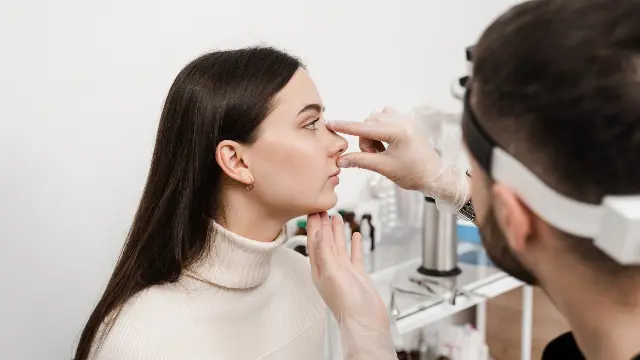
In addition to 3D CT scans, Dr Jun Kim uses nasal endoscopy to examine the health of the mucous membranes. This is a critical step that many general plastic surgeons overlook. Because Dr Jun Kim is an ENT specialist, he knows that the health of the internal lining of the nose is just as important as the cartilage and bone.
Endoscopy allows the doctor to diagnose conditions like chronic rhinitis or sinusitis. These conditions can often be treated at the same time as the autologous cartilage rhinoplasty. This comprehensive approach means that patients can finally find relief from long term breathing problems while also getting the nose they have always wanted. For international patients, this two in one approach is incredibly valuable, as it maximizes the benefits of their trip to Korea.
The diagnostic phase also involves personalized surgical mapping. Every nose is different, and there is no one size fits all solution in autologous cartilage rhinoplasty. By combining 3D CT data with endoscopic findings, Dr Jun Kim creates a roadmap for the surgery that is unique to each individual. This level of precision is what leads to the natural and functional results that Baroko is known for.
The Recovery Journey And Capsule Therapy
The thought of recovery can be a source of anxiety for many patients. However, when autologous cartilage rhinoplasty is performed with precision and supported by modern recovery technology, the process is much smoother than most people expect. Understanding the timeline and the tools available can help you prepare for a successful healing journey.
| Timeline | Recovery Phase | Activity Level |
|---|---|---|
| Days 1 to 3 | Acute Recovery | Rest and use of Recovery Capsule Therapy to reduce swelling. |
| Day 7 | External Splint Removal | Most patients can begin light walking and social activities. |
| Day 14 | Final Stitch Removal | Safe to fly back to NYC or LA; significant bruising usually subsided. |
| 3 to 6 Months | Intermediate Healing | Major swelling disappears; the nasal structure begins to define. |
| 1 Year | Final Result | The autologous cartilage is fully integrated and the final shape is set. |
The First 72 Hours What To Expect
The first three days after surgery are the most critical for managing swelling and ensuring comfort. Unlike surgeries that use large synthetic implants, autologous cartilage rhinoplasty tends to have a very stable initial healing phase because the body does not fight the new tissue. Patients usually describe the sensation as pressure or stuffiness rather than sharp pain.
During this time, it is normal to experience some bruising around the eyes. Dr Jun Kim and his team provide detailed pain management protocols and instructions on how to use cold compresses to minimize swelling. It is also important to keep the head elevated and avoid any strenuous activity. For patients traveling from the USA, the first few days are a good time to rest in a comfortable hotel and let the initial healing take place.
Baroko Recovery Capsule Therapy
One of the unique features at Baroko Plastic Surgery is the Recovery Capsule Therapy. This is a high tech recovery tool that uses oxygen and light therapy to speed up the healing of tissues. The capsule provides a concentrated oxygen environment which helps to reduce inflammation and promote the growth of new blood vessels in the transplanted cartilage.
For international travelers, this technology is a game changer. It significantly reduces the down time required before you can safely fly back to New York or Los Angeles. By accelerating the body natural healing processes, the Recovery Capsule Therapy helps to resolve bruising and swelling much faster than traditional methods alone. It is part of the premium experience that Baroko offers to ensure that every patient has the best possible recovery from their autologous cartilage rhinoplasty.
Long Term Healing The One Year Mark
While the initial swelling goes down within a few weeks, the final shape of an autologous cartilage rhinoplasty takes about a year to fully settle. This is because the cartilage needs time to fully integrate with the surrounding tissues and for the skin to shrink wrap around the new structure.
During the first year, you will notice the nose becoming more refined and defined each month. Because the surgery uses your own cartilage, the results age naturally with you. There is no risk of the implant shifting or the skin thinning over time. Regular follow up appointments, which can be done virtually for US patients, ensure that everything is healing as planned. By the one year mark, the result is a nose that looks and feels completely natural, as if you were born with it.
Addressing Contracted Nose And Revision Rhinoplasty
For many patients, autologous cartilage rhinoplasty is not their first nasal surgery. Some come to Baroko because they are unhappy with the results of a previous procedure or because they are experiencing complications from a synthetic implant. These revision cases require a much higher level of skill and a deep understanding of nasal anatomy.
What Is A Contracted Nose
A contracted nose is one of the most difficult complications to fix. it often happens after a patient has had multiple surgeries or an infection related to a silicone implant. The scar tissue inside the nose tightens and pulls the tip upward, creating a pig nose appearance. This not only looks unnatural but also makes breathing very difficult.
Fixing a contracted nose requires removing the old implant and all the scar tissue, then rebuilding the entire structure using rib cartilage. This is where the power of autologous cartilage rhinoplasty truly shines. By using the patient own rib cartilage, Dr Jun Kim can create a strong and stable framework that resists future contraction. He can lengthen the nose and restore a natural tip position, giving the patient their confidence back. These are some of the most rewarding cases for the Baroko team, as they represent a true restoration of a person quality of life.
Functional Nasal Surgery Septoplasty And Nasal Valve Correction
It is very common for cosmetic concerns to be accompanied by functional problems. Many people who want a nose job also suffer from a stuffy nose or difficulty breathing through one or both nostrils. This is often due to a deviated septum or a collapse of the nasal valves.
Because Dr Jun Kim is a dual specialist, he can address these issues simultaneously during an autologous cartilage rhinoplasty. He can perform a septoplasty to straighten the internal wall and use cartilage grafts to support the nasal valves. This ensures that the patient does not have to choose between looking good and breathing well. This functional approach is a key advantage of choosing an ENT led clinic like Baroko. Whether it is a primary surgery or a complex revision, the goal is always a nose that works perfectly and looks beautiful.
Dr Jun Kim often emphasizes that a revision case is not just a second surgery. It is a restoration of a patient confidence and their ability to breathe freely. This holistic view of patient care is why so many people travel from across the globe to seek his expertise in autologous cartilage rhinoplasty.
Autologous Cartilage Rhinoplasty Vs Non Surgical Procedures
In recent years, non surgical options like nose fillers and thread lifts have become popular. While these can offer temporary improvements, they are not a substitute for the permanent and structural changes possible with autologous cartilage rhinoplasty. It is important for patients to understand the limitations and risks of these quick fixes.
Why Fillers Are Temporary
Nose fillers, usually made of hyaluronic acid, work by adding volume to the nose to hide bumps or raise the bridge. While the results are instant, they are also temporary. The body eventually breaks down the filler, meaning you have to repeat the procedure every six to twelve months.
More importantly, fillers carry significant risks when used in the nose. The nose has a complex network of blood vessels, and if filler is accidentally injected into a vessel, it can cause skin necrosis or even blindness. This is a rare but serious complication. Additionally, repeated filler injections can lead to filler migration, where the material spreads out, causing the bridge of the nose to look wider and less defined over time. This is often called filler spread and can be quite difficult to correct.
The Permanent Advantage Of Cartilage
In contrast, autologous cartilage rhinoplasty is a one time permanent solution. Instead of just adding volume on top of the skin, the surgery changes the underlying structure of the nose. This allows for changes that fillers simply cannot achieve, such as narrowing a wide tip, shortening a long nose, or correcting a significant deviation.
Using your own cartilage ensures that the results stay in place for the rest of your life. There is no risk of the material migrating or being absorbed by the body. While the upfront cost and recovery time are greater than a filler injection, the long term value is much higher. You avoid the ongoing expense and risks of repeated injections and you get a result that is far more refined and natural. For anyone looking for a lasting change, autologous cartilage rhinoplasty is the clear choice.
Why Choose Baroko Plastic Surgery For Your Nose Surgery
Choosing the right clinic is the most important step in your surgical journey. Baroko Plastic Surgery has built a reputation as a leader in autologous cartilage rhinoplasty by combining world class medical expertise with a patient centered approach.
Dr Jun Kim Expertise And Experience
Dr Jun Kim brings over twenty years of experience to every procedure. As an adjunct professor at Samsung Medical Center, he is at the forefront of surgical education and technique. He performs over two hundred specialized rhinoplasty procedures every year, which means he has seen and treated almost every possible nasal shape and complication.
This level of focus is rare. Many plastic surgeons are generalists who perform everything from breast augmentations to facelifts. By specializing in the nose, Dr Jun Kim has developed a level of mastery that allows him to achieve superior results in autologous cartilage rhinoplasty. He understands the subtle nuances of nasal aesthetics and the complex mechanics of nasal function.
ENT Specialist Led The Functional Advantage
The fact that Baroko is led by an ENT specialist provides an extra layer of safety and expertise. Dr Jun Kim deep knowledge of nasal disease and internal anatomy means he can handle complex cases that other surgeons might avoid. Whether you have a history of nasal bone fractures, chronic rhinitis, or a severely deviated septum, you are in safe hands.
This functional advantage is particularly important for patients who want to ensure their breathing is not compromised by cosmetic changes. In an autologous cartilage rhinoplasty, every graft is placed with both beauty and airflow in mind. This dual focus is what leads to the high patient satisfaction rates at Baroko.
International Patient Support
Baroko understands that traveling to another country for surgery is a big decision. That is why they have a dedicated support system for international patients, especially those coming from New York City and Los Angeles. The clinic has English speaking staff who can assist with every step of the process.
From the initial virtual consultation to airport pickup and assistance with local accommodations, the Baroko team makes the journey as smooth as possible. They provide clear communication and detailed instructions to ensure that you feel supported before, during, and after your autologous cartilage rhinoplasty. This commitment to international patient care is why Seoul has become a top destination for those seeking the best in plastic surgery.
How To Book Your Autologous Cartilage Rhinoplasty
If you are ready to take the next step toward the nose you have always wanted, the process at Baroko is designed to be straightforward and transparent.
Step 1 Virtual Consultation
For patients in the USA, the journey begins with a free virtual photo evaluation. You can send photos of your nose from different angles, and Dr Jun Kim will provide an initial assessment. This allows you to get expert advice from the comfort of your home and understand what autologous cartilage rhinoplasty can do for you. During this stage, you can ask questions about the technique, the types of cartilage that might be used, and the expected results.
Step 2 Personalized Planning
Once you decide to move forward, the team will help you schedule your trip to Seoul. When you arrive at the clinic, you will have an in person consultation that includes 3D CT imaging and a thorough nasal exam. Dr Jun Kim will then create a personalized surgical plan based on your unique anatomy and goals. This ensures that every detail of your autologous cartilage rhinoplasty is accounted for before the surgery begins.
Contact Information
📞 Phone:
💬 WhatsApp: Click Here
📧 Email:
🌐 Website: https://www.barokoplasticsurgery.com
📍 Location: Baroko Plastic Surgery, Seocho-gu, Seoul, South Korea
🕐 Hours: From Monday 10:00am - 7:00pm Tuesday 10:00am - 7:00pm Wednesday 10:00am - 7:00pm Thursday 10:00am - 7:00pm Friday 10:00am - 7:00pm Saturday 10:00am - 4:00pm Sunday Closed
Conclusion
Autologous cartilage rhinoplasty represents the pinnacle of natural and safe nasal surgery. By using your own tissue, you eliminate the risks associated with synthetic implants and ensure a result that is both durable and beautiful. Dr Jun Kim ENT background ensures that your functional health is prioritized, meaning you will breathe as well as you look. With advanced technology like 3D CT imaging and the unique Recovery Capsule Therapy, Baroko Plastic Surgery provides a premium experience that is tailored to the needs of international patients.
Choosing the right path for your face is a significant decision. Autologous tissue is the safest material for nasal surgery because it integrates perfectly with your body. Whether you are looking for your first surgery or need a complex revision of a contracted nose, the expertise of Dr Jun Kim and the Baroko team can help you achieve your goals.
Ready for a nose that looks and feels like yours? Book your virtual consultation with Baroko Plastic Surgery today and discover why autologous cartilage rhinoplasty is the choice for patients who refuse to compromise on safety or beauty.
Author Bio
Dr. Jun Kim is a board certified ENT specialist and the Chief Director of Baroko Plastic Surgery. With over 20 years of experience, he has become a leading authority in rhinoplasty and complex revision cases. He serves as an adjunct professor at Samsung Medical Center, where he contributes to the advancement of surgical techniques. Dr. Kim is dedicated to providing his patients with natural results that prioritize both aesthetic beauty and functional health. His expertise in contracted nose revision surgery in Seoul has made him a sought after specialist for patients from around the world.
For consultations : | | WhatsApp
More Articles
Continue reading our clinical guides.
Types of Rhinoplasty: All Techniques Explained | Baroko
Explore every type of rhinoplasty open, closed, non-open, revision and implant-free explained by Dr. Jun Kim, Seoul ENT rhinoplasty expert with 20+ years.
Learn MoreRhinoplasty Results Timeline: Month 1 to Year 1 Complete Guide
Detailed month-by-month rhinoplasty results guide. See when swelling subsides, when to expect final results, and what natural outcomes look like.
Learn MoreMale Rhinoplasty In Seoul: Natural And Masculine Results | Baroko
Seeking a masculine, natural result? Expert rhinoplasty for men in Seoul by Dr. Jun Kim. ENT led, implant free techniques for breathing and aesthetics. Book your Zoom consult.
Learn More