Personalized Medical Care & Dedicated International Patient Concierge
Medical Guide
Rhinoplasty Results Timeline: Month 1 to Year 1 Complete Guide
Detailed month-by-month rhinoplasty results guide. See when swelling subsides, when to expect final results, and what natural outcomes look like.
Schedule a Consultation
Introduction
You've made the decision to have rhinoplasty, and now the hardest part begins: waiting to see your results. One of the most common questions patients ask in those early weeks is simple but urgent: "When will I actually see what my nose looks like?" The answer is more nuanced than you might expect. Understanding the timeline can help you manage your expectations and stay confident during the healing process.
Many patients expect their rhinoplasty results to be instantly visible after surgery, only to experience disappointment when they wake up to a swollen, bruised nose that bears little resemblance to what they imagined. Swelling and bruising can last weeks or even months, masking the true contours of your new nose. Without clear expectations about when results will actually emerge, you may spend the recovery period anxious, comparing yourself to before-and-after photos that don't match your current reality.
By the end of this guide, you'll understand exactly what to expect at each stage of your rhinoplasty healing journey. From the immediate post-op period when swelling completely obscures your results, through the critical three-month and six-month milestones when significant changes become visible, to the full 12-month mark when your rhinoplasty results are completely evident. You'll learn why results take time, what factors influence your personal timeline, how ethnic background affects healing, and how to manage expectations realistically during the waiting period.
As a board-certified ENT-trained rhinoplasty surgeon at Baroko Plastic Surgery with over 20 years of experience and more than 4,000 rhinoplasty procedures performed, Dr. Jun Kim has guided thousands of international patients through this exact healing journey. This guide draws on clinical expertise in both primary and revision rhinoplasty, with special attention to how implant-free, autologous cartilage techniques heal differently than traditional approaches.
Understanding Rhinoplasty Results: What Happens in the First Year
The First Year Is a Progression, Not an Instant Transformation
Rhinoplasty results are not visible immediately after surgery; swelling completely obscures the final shape. Instead, the first year of healing can be divided into distinct phases, each revealing more of your actual results. Natural rhinoplasty results look like your nose always looked this way, and no one will suspect surgery unless you tell them. Most noticeable changes occur in the first three months, while continued refinement occurs through month 12.
When patients ask me "When will I see my rhinoplasty results?" I tell them the truth: your nose is being sculpted by time as much as by surgical technique. The first three months are about swelling resolution. The next three to nine months are about tissue remodeling and final settling. This is why patience is actually a clinical requirement for beautiful rhinoplasty results. The gradual unfolding of your results is not a flaw in the process; it's fundamental to how excellent outcomes emerge.
Why Swelling Obscures Your Rhinoplasty Results
Surgical trauma causes inflammatory swelling that can swell the nose to 1.5 to 2 times normal size immediately post-op. This swelling is not uniform. The tip and bridge swell more than other areas, distorting the intended shape. Additionally, internal swelling within the nose, in the septum, and in nasal passages is not visible but still affects overall shape perception.
Swelling is the primary reason rhinoplasty results are not visible for weeks or months. This is true for all rhinoplasty techniques, though swelling patterns vary. Implant-free rhinoplasty often has a slightly different swelling curve than implant-based approaches because the body must integrate grafted cartilage while managing post-operative inflammation simultaneously.
The following table shows how swelling resolves across different stages:
| Swelling Stage | Timeline | Percent Swelling Remaining | What This Means for Visibility |
|---|---|---|---|
| Immediate post-op (Day 0) | First 24 hours | 100 percent (peak) | Nose is dramatically swollen; cannot judge results |
| Early swelling (Week 1-2) | Begins to improve | 70-80 percent | Major swelling still present; results not visible |
| Moderate swelling (Week 2-6) | Gradual reduction | 40-60 percent | Some shape emerging; still significantly obscured |
| Significant improvement (Week 6-12) | Rapid change | 20-40 percent | Major improvements visible; results becoming clear |
| Mild residual swelling (Month 3-6) | Slow reduction | 5-20 percent | Results clearly visible; fine details still settling |
| Final settling (Month 6-12) | Very gradual | Less than 5 percent | Final results fully apparent |
Immediate Post-Op (Days 0–3): Peak Swelling, No Visible Results
The First 24 Hours: Peak Swelling and Bruising
Peak swelling occurs within 24 hours after surgery. Your nose may appear 1.5 to 2 times normal size due to surgical trauma. Significant bruising appears under the eyes and across the bridge, often looking worse than it feels. You cannot judge rhinoplasty results at this stage because the swelling is too severe.
Stitches or dissolving sutures may be visible, and a bandage or splint is in place. Pain is typically moderate and managed with prescribed medication. Sleeping position matters significantly: keep your head elevated on three to four pillows to reduce swelling.
When patients first look in the mirror after rhinoplasty, they often panic. The nose looks enormous, swollen, bruised, and stitched up. This is completely normal. I tell them: do not judge your rhinoplasty results for at least six weeks. What you see now is trauma; what you'll see in a month is your actual results.
Days 2–3: Stitches Removed, Swelling Continues
The splint or bandage is typically removed at five to seven days, though timing varies by technique. If stitches are present and non-dissolving, they are removed around day five to seven. Swelling continues to increase slightly even as you see the nose for the first time without dressing.
Bruising peaks around day two to three, appearing dark purple or black, which can look dramatic. Your nose is still dramatically swollen at this stage, and the true shape is completely obscured. This is not the time to judge your rhinoplasty results. The appearance will change dramatically over the coming weeks.
Week 1: First Visible Improvement
Days 4–7: Splint Removal and First Nose-Shape Recognition
The splint or bandage is removed around day five to seven, depending on technique and surgeon preference. For the first time, you see your actual nose shape, even though it's still swollen. Many patients experience emotional relief at this stage because they can finally see their nose exists under the swelling.
Swelling has reduced to approximately 60 to 70 percent of the post-op peak. Bruising begins to fade but is still visible; the color shifts from dark purple to yellow-green. For the first time, you may notice the actual contour changes from your original nose, even through the remaining swelling. Many international patients fly home during this window after clearance from their surgeon.
By day five or six, when I remove the splint, patients see their nose for the first time. Even through tremendous swelling, they can perceive that something has changed. The bridge might look smoother, the tip might look refined. They're seeing maybe 30 percent of their actual rhinoplasty results at this point. The other 70 percent is still hidden by swelling. But this moment is important psychologically. It proves that the surgery happened, and their new nose is in there.
Days 8–14: Bruising Fades, Swelling Begins to Noticeably Decrease
Bruising under the eyes and across the nose begins to fade significantly, shifting from yellow-green to light brown. Many people can return to work by day seven to ten if their job doesn't require a public-facing appearance. You can wear glasses if provided by your surgeon to help conceal any remaining bruising.
Swelling has reduced to approximately 50 to 60 percent of immediate post-op levels. Your nose is taking a more recognizable shape but is still clearly swollen. You may start to see hints of your final rhinoplasty results, but they're still mostly hidden. Tenderness and discomfort continue but are generally mild by day 10. Most dissolvable stitches are dissolved or falling out by day seven to ten.
Weeks 2–4 (Month 1): Major Swelling Reduction, Results Becoming Visible
Week 2–3: The "Wow" Moment Results Emerge
Swelling has reduced to approximately 40 to 50 percent of immediate post-op levels. For the first time, your actual rhinoplasty results become genuinely visible and recognizable. This is when many patients have an emotional "wow" moment. They see that the surgery worked, and their new nose is finally emerging from beneath the swelling.
Bruising is nearly gone, with only faint yellow or brown remaining, or completely resolved in most patients. You can generally return to public-facing activities like work and social events at this stage. The nose still looks slightly swollen, but the actual shape changes are now clearly visible. For ethnic rhinoplasty, especially Asian noses, the bridge definition and tip refinement become apparent during this window.
Week two or three is when patients call me excited. They say, "I can finally see my new nose!" And they can. They're seeing maybe 60 to 70 percent of their actual rhinoplasty results. It's not the final result yet, but it's unmistakably better. This is an important psychological milestone. The fear and uncertainty of the first week give way to confidence and excitement about the journey ahead.
Week 3–4: Swelling Continues to Decrease, Results Stabilizing
Swelling has reduced to approximately 30 to 40 percent of immediate post-op levels. Your rhinoplasty results are now clearly visible to everyone who sees you. If you haven't told people about your surgery, they may not notice because results look natural, not obviously surgical. Your nose no longer feels tight or tender; you can touch your nose without discomfort.
You can resume light exercise like walking and yoga but should avoid impact activities. Many patients can wear contacts again if they were wearing glasses for healing. The nose is approaching its month-one appearance, which many patients consider quite close to their final result, though it will refine further. For implant-free rhinoplasty, the cartilage is beginning to integrate and stabilize.
Months 2–3: Significant Changes, Results 85–90 Percent Visible
Month 2: The "This Is It" Moment
Swelling has reduced to approximately 15 to 25 percent of immediate post-op levels. Your rhinoplasty results are now 85 to 90 percent of what they will be at 12 months. Most patients feel their results are essentially final at this stage, though minor refinement continues.
Your new nose feels completely normal; there's no residual tenderness or tension. You can resume full exercise, including running, gym activities, and impact sports. Most patients no longer think about their surgery. Their new nose feels like the natural nose they've always had. For Southeast Asian rhinoplasty, the bridge definition, tip projection, and nostril shape have fully settled. You can style your hair normally, wear hats, and sleep on either side without concerns.
By month two or three, most of my patients tell me they've stopped thinking about their surgery. Their new nose just feels normal. They're living their life, not monitoring their healing. Your rhinoplasty results are clear, natural, and stable. What you see at month three is approximately 85 to 90 percent of your final month-12 result. The remaining 10 to 15 percent will be subtle refinement of tissue remodeling.
Month 3: The "Critical Milestone"
The three-month mark is the clinical milestone where swelling is considered resolved or resolved enough that results are final. Remaining swelling is so subtle that it does not meaningfully affect how your nose looks. Most surgeons and patients consider month-three results to be the final result for practical purposes.
Asymmetry concerns that appeared in month one to two often resolve by month three as swelling resolves evenly. For revision rhinoplasty, month three is when you can truly judge whether the correction addressed your original concerns. Return flights to the US are typically planned for days seven to ten post-op, so month-three results occur at home with your follow-up surgeon. Content creators and public-facing patients often feel comfortable documenting or revealing their results at month three.
Months 4–6: Final Settling and Tissue Remodeling
Month 4–5: The "Imperceptible Change" Phase
Remaining swelling is now less than 5 percent of the immediate post-op swelling. Changes are so subtle that you will not notice them day-to-day or even week-to-week. Tissue remodeling and scar maturation continue beneath the surface. For autologous cartilage rhinoplasty, the grafted cartilage is fully vascularized and integrated into nasal structures.
The nose feels completely normal; there is no sensation of tightness or healing. You will not perceive any difference in your appearance, but microscopic cellular changes are occurring. If you compare photos from month three to month five, the differences are imperceptible to most observers. Your body is simply completing its natural healing process.
From month four onward, your rhinoplasty results are essentially final from a visual perspective. But biologically, your tissues are still maturing. The scarring is becoming softer, the cartilage is fully integrated, and any minute swelling is resolving. These changes are invisible to the naked eye, but they contribute to the absolute best final result by month 12.
Month 6: The "Half-Year Milestone"
Six months post-op is often considered the point where final rhinoplasty results are absolutely, completely visible. Any remaining changes are truly imperceptible to anyone observing you. Scar tissue, if there are any external scars from open rhinoplasty, has significantly matured and lightened.
For implant-free rhinoplasty, the autologous cartilage graft is completely stable and will not change shape. Your rhinoplasty results are now stable for life, barring trauma or natural aging. You can confidently show before-and-after photos without any caveat that results may still change. For content creators and public figures, month six is a natural point for sharing their full rhinoplasty journey with audiences.
Months 7–12: Final Tissue Maturation and Refinement
Months 7–9: Approaching True Finality
Swelling is now completely resolved; there is no remaining edema. Scar maturation, if applicable, is nearly complete. Cartilage grafts in implant-free rhinoplasty are fully healed and stable. The nose has assumed its final shape permanently.
Any subtle changes at this stage are truly imperceptible. You would need to compare high-resolution photos from month three and month nine to see any difference, and most observers would not perceive it. This is the point where revision surgery, if needed, can be accurately planned because true final results are evident. Your rhinoplasty results are locked in and will remain stable indefinitely.
Month 12: The One-Year Milestone and Absolute Final Results
One year post-op is the clinical endpoint for rhinoplasty healing. This is when results are considered 100 percent final and stable. No further changes will occur, except for natural aging over decades. Scar maturation, if applicable, is complete; scars have faded to barely visible. They may take one to two additional years to become as faint as possible, but functional maturation is complete.
For patients considering revision surgery, this is the point where you can accurately assess whether revision is needed. Your rhinoplasty results will remain stable for your lifetime. The nose is as natural and integrated as it will ever be.
Why Rhinoplasty Results Take Time The Physiology
Inflammatory Swelling and Its Timeline
Surgical trauma triggers an inflammatory response. Your body perceives the nose as injured and responds with swelling to protect and heal the area. This inflammatory swelling is at its peak within 24 hours and gradually resolves over weeks and months. Swelling is the dominant factor obscuring your rhinoplasty results for the first three months.
Different tissues swell at different rates. The tip swells more and longer than the bridge, which is why asymmetry concerns often emerge in month one to two and resolve by month three. Internal swelling within the nasal passages and sinuses resolves on a different timeline than external swelling. Anti-inflammatory measures like compression, head elevation, and cold therapy help reduce swelling faster but cannot eliminate the biological process.
The following table details swelling patterns across different tissue types:
| Swelling Type | Peak Timeline | Resolution Timeline | Impact on Results |
|---|---|---|---|
| External nasal swelling | 24-48 hours | Resolves by week 6-8 | Obscures external shape |
| Tip swelling (excessive) | 48 hours-1 week | Resolves by week 10-12 | Affects tip definition and projection |
| Internal nasal swelling | 24-72 hours | Resolves by week 4-6 | Affects breathing, nasal passages |
| Sinus swelling | 48 hours-1 week | Resolves by week 3-4 | Affects overall nasal contour |
| Deep tissue swelling | 24 hours onward | Gradual resolution through month 6 | Subtle ongoing changes |
Tissue Remodeling and Scar Maturation
After the inflammatory phase resolves by month three, tissue remodeling takes over. Scar tissue forms wherever surgical incisions or grafts were placed; this scar tissue gradually softens and integrates over months. Collagen, which is laid down during healing, is initially disorganized and stiff; it gradually reorganizes into a more natural, pliable structure.
For autologous cartilage grafts, vascularization (blood vessel growth) into the graft takes weeks. The graft is fully integrated by month three to six. Fibroblasts (cells that produce collagen) continue refining the tissue architecture through month 12. This tissue remodeling explains why results continue to subtly improve from month three to month 12, even though the swelling is resolved.
The nose is technically healed at month three from a patient perspective but is still remodeling biologically through month 12. The body is remarkably intelligent in its healing process. After we shape the nose surgically, the tissues don't just stay as we left them; they reorganize. Scars soften, cartilage integrates, and collagen reorganizes into its final orientation. This biological process takes about a year. That's why we always tell patients: give it a full year before judging your rhinoplasty results or considering revision.
Factors Affecting Your Personal Rhinoplasty Results Timeline
Surgical Technique and Approach
Implant-free autologous cartilage rhinoplasty often has a slightly different swelling timeline than implant-based rhinoplasty. Autologous cartilage requires integration time, so the final settling phase from months six to 12 may be slightly more noticeable than with implants. Open rhinoplasty, which involves an external incision, may have slightly more swelling and a longer timeline than closed rhinoplasty, which involves no external incision.
Functional rhinoplasty combined with aesthetic rhinoplasty may have different swelling patterns because internal nasal passages take longer to resolve than external tissues. Revision rhinoplasty typically has a longer and more variable timeline than primary rhinoplasty because additional surgical trauma occurs and scar tissue must be managed around previous work.
Individual Healing Factors
Age influences healing significantly. Younger patients generally heal faster than older patients. Genetics play a substantial role; some people naturally swell more or less than others, and this is largely predetermined. Ethnicity affects healing patterns, with different ethnic groups showing varying swelling responses and timelines.
Skin type and thickness influence results visibility. Thicker skin retains swelling longer than thin skin. Overall health matters: patients with conditions affecting circulation or inflammation, such as diabetes or autoimmune conditions, may have different timelines. Medications including blood thinners, NSAIDs, and immunosuppressants can affect swelling and healing.
Lifestyle choices impact recovery significantly. Smoking, alcohol consumption, and poor sleep slow healing, while exercise and good nutrition accelerate it. Compliance with post-op instructions reduces swelling faster. Following compression, elevation, and activity restrictions produces noticeably better results in shorter timeframes.
The following table summarizes how various factors affect your healing timeline:
| Factor | Effect on Swelling/Timeline | Impact |
|---|---|---|
| Age (younger) | Faster healing | Results visible earlier |
| Age (older) | Slower healing | Results take longer to resolve |
| Thick skin | Retains swelling longer | Month 3-4 results may still look slightly swollen |
| Thin skin | Faster swelling reduction | Results visible earlier but may show asymmetry more |
| Genetics (predisposed to swelling) | More dramatic swelling | Longer timeline overall |
| Genetics (minimal swelling) | Less pronounced swelling | Results visible quickly |
| Smoking | Impaired healing | Delayed swelling resolution; potential complications |
| Good nutrition and hydration | Optimal healing | Faster, cleaner results |
Ethnic-Specific Factors
Asian and Southeast Asian noses have thicker skin than Caucasian noses, which can extend swelling timelines by two to four weeks. Thicker skin retains edema longer but also allows for better structural support of grafted cartilage. For Vietnamese, Korean, and other Asian rhinoplasty patients, the critical timeline is month four to six rather than month three.
Ethnic noses with wider bridges and thicker tips may show swelling changes more obviously than refined noses. This is not a complication; it's a normal variation in healing based on anatomical differences. By month six, ethnic-specific results are absolutely final and look completely natural.
When I'm performing rhinoplasty on patients of different ethnic backgrounds, I adjust my expectations for the timeline. An Asian patient with thicker nasal skin might not see their final rhinoplasty results as clearly at month three as a Caucasian patient. But by month six, the results are identical in quality. Just the healing journey was slightly longer. This is completely normal and not a sign of any problem.
Rhinoplasty Results for Specific Concerns
Dorsal Hump Reduction Results Timeline
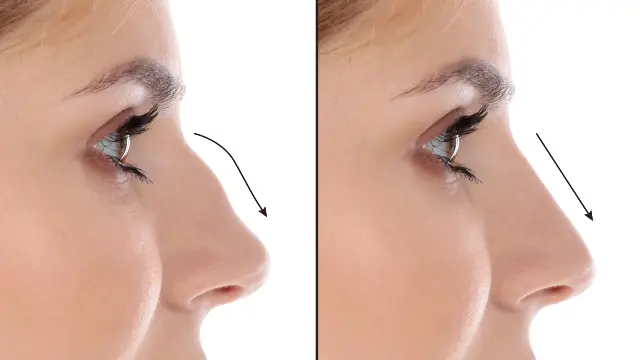
Dorsal hump reduction is one of the most common concerns. Dorsal hump reduction follows a consistent timeline across patients with this primary goal.
In week one, the hump is still visible under significant swelling. By month one, the reduction becomes clearly visible, and the bridge looks smoother. At month three, the dorsal line looks completely natural and refined. From month six to 12, final settling shows the smoothest possible dorsal profile. The timeline for hump reduction is similar to overall rhinoplasty timeline because the bridge swells uniformly in most patients.
Wide Bridge or Tip Refinement Results Timeline
Wide bridge or wide tip refinement follows a slightly different perception curve than dorsal hump work. In week one, the bridge and tip are still very swollen and appear wider than the original nose. By month one, significant narrowing becomes visible, and the definition emerges. At month three, the bridge and tip look refined, and the width reduction is completely apparent. By month six, final settling shows the most refined appearance.
For Asian rhinoplasty, the swelling may be more pronounced, so month four to five results may look even better than month three. The progression is steady and predictable, with the most dramatic visible changes occurring in months one through three.
Managing Expectations During Your Results Timeline
The Emotional Journey of Waiting for Results
The first month is often the most emotionally challenging. Your nose looks worse before it looks better. Many patients experience a range of emotions: initial panic about swelling at week one, excitement when results emerge at week two to three, and then patience as they wait for final rhinoplasty results.
This emotional timeline is completely normal and does not indicate anything is wrong. Social media and before-and-after galleries can create unrealistic expectations. Some photos are taken at month three and labeled final results, while others are taken at month 12. The key is patience and trust in the process. Comparing your month-two results to someone else's month-six results will create unnecessary anxiety.
If I could tell every patient one thing, it would be this: trust the timeline. Your nose is healing exactly as it should. The panic you feel at week one is the peak of discomfort and worry. Everything gets better from there. By month three, you'll forget you ever worried. By month six, you'll look back at your surgery date as a turning point in your confidence.
When to Worry vs. When to Be Patient
Asymmetry in weeks one to four usually reflects differential swelling, not a surgical problem. The tip swells more than the bridge; one side may swell more than the other. This almost always resolves by week six to eight. Contact your surgeon only if asymmetry persists beyond month four.
Numbness or tightness in week one to two is normal nerve swelling; it resolves by week three to four. Uneven swelling in month one to two is normal and usually resolves by month three to four. When you should contact your surgeon: severe pain not controlled by medication (may indicate bleeding or infection), excessive bleeding more than light seeping after week one, signs of infection including fever, pus, or spreading redness, and difficulty breathing that worsens rather than improves.
Comparing Your Timeline to Others And Why You Shouldn't
Every Nose Heals Differently
The before-and-after photos you see online represent individual cases with individual healing timelines. A before-and-after labeled three-month results shows one patient's month-three appearance, which may differ significantly from yours. Some people have visibly beautiful results at month one; others don't reach that point until month four to five.
Skin thickness, genetics, age, surgical complexity, and surgeon technique all affect the timeline. Your rhinoplasty results timeline is unique to you. Comparing your month three to someone else's month six creates unnecessary anxiety. The best approach: focus on your own progress. Compare your month three to your own month one, not to someone else's results.
Trust that by month 12, you will see the complete, final result that matches the surgeon's plan. Remember: even if your month three looks slightly different from your month six, both are part of normal healing. Individual variation is expected and completely normal.
How to Book Your Rhinoplasty at Baroko
Step 1 Schedule Your Virtual Consultation
A free virtual consultation is available via Zoom or video call. During the consultation, Dr. Jun Kim personally reviews your submitted photographs, discusses your specific anatomy and goals, explains which technique is recommended for your case and the clinical reasoning behind that recommendation, and provides a complete, transparent cost estimate with no hidden fees. To book, use the consultation form on the Baroko website, WhatsApp, or email. Initial response is provided within 24 hours of submission.
Step 2 Submit Your Case Details
Before the consultation, patients are asked to submit front-view, both side-view, and base-view photographs of their nose in good natural lighting. Revision patients should also submit their previous surgical records and any available imaging, including CT scans or X-rays, if these were taken as part of their prior care. All submitted materials are reviewed by Dr. Jun Kim personally before the consultation not reviewed by a coordinator and summarized afterward.
Contact Information
📞 Phone:
💬 WhatsApp: Click Here
📧 Email:
🌐 Website: https://www.barokoplasticsurgery.com
📍 Location: Baroko Plastic Surgery, Seocho-gu, Seoul, South Korea
🕐 Hours: From Monday 10:00am - 7:00pm Tuesday 10:00am - 7:00pm Wednesday 10:00am - 7:00pm Thursday 10:00am - 7:00pm Friday 10:00am - 7:00pm Saturday 10:00am - 4:00pm Sunday Closed
Frequently Asked Questions About Rhinoplasty Results
How Long Does It Take to See Rhinoplasty Results?
Visible results begin emerging at week two to three, with 85 to 90 percent of final results visible by month three. Final settling continues through month 12, but the critical milestones are week three (first major improvement), month three (clinical final results), and month 12 (absolute finality). Most patients feel confident about their appearance by month three.
What Do Rhinoplasty Results Look Like in the First Month?
In the first month, your nose is still significantly swollen. Week one shows peak swelling with bruising. By week three to four, swelling has reduced to 30 to 40 percent of peak, and you can clearly see that your nose has changed. The shape is obvious but still slightly swollen. This is approximately 70 to 80 percent of your final result.
Can I See My Final Rhinoplasty Results Before Six Months?
Most patients see results they consider final by month three. However, the absolute final result, where tissue remodeling is completely done, is month 12. The difference between month three and month 12 is subtle but noticeable in high-resolution photos. Practically speaking, month three to four results are considered final for most purposes.
Why Does My Rhinoplasty Look Different Every Day in the First Month?
Swelling varies hour-to-hour and day-to-day based on sleep position, salt intake, and inflammation levels. You may look more swollen in the morning due to horizontal position increasing swelling and less swollen in the evening. This is completely normal and will resolve as swelling decreases overall.
What Does the Three Month Rhinoplasty Milestone Mean?
The three-month mark is the clinical endpoint where swelling is considered resolved and results are considered final. Remaining changes from month three to month 12 are subtle tissue remodeling that is imperceptible to the naked eye. Most surgeons use month three as the point where they assess whether revision is needed.
How Much Will My Rhinoplasty Results Change From Month Three to Month Twelve?
Changes from month three to month 12 are very subtle. You may notice slight additional refinement of the tip or bridge in high-resolution photos, but to the naked eye, your rhinoplasty results are essentially final at month three. The month three to 12 period is about tissue maturation, not visible reshaping.
Can I Tell if My Rhinoplasty Results Are Natural Looking in the First Month?
In the first month, you cannot reliably judge whether your results look natural because swelling is still hiding the final shape. By month three to four, when swelling is resolved, you can judge whether your nose looks natural or obviously surgical. Baroko's philosophy emphasizes harmony first, so results should look like your nose always looked this way.
Do Ethnic Noses Have Different Rhinoplasty Result Timelines?
Yes. Asian and Southeast Asian noses with thicker skin may take slightly longer to show results. The critical timeline is month four to six rather than month three. This is not a complication; it's normal variation in healing. By month six to 12, the results are equally beautiful and natural.
When Can I Film Content or Appear on Camera After Rhinoplasty?
Week three to four: light makeup can cover remaining bruising; suitable for close-up or professional headshots. Month two to three: results are essentially final-looking; suitable for any content. Month three and beyond: results are completely settled; optimal for any camera work or public appearance.
What If My Rhinoplasty Results Look Asymmetrical in Month Two?
Asymmetry in early healing is common and usually reflects differential swelling, not a surgical problem. The tip swells more than the bridge; one side may swell more than the other. This almost always resolves by month three to four. Contact your surgeon only if asymmetry persists beyond month four.
Conclusion
Your rhinoplasty results represent a gradual journey, not an instant transformation. The first three months show the most dramatic changes as swelling resolves and your actual surgical results emerge from beneath the edema. From month three to month 12, continued but subtle tissue remodeling refines your final outcome. The changes during this period are imperceptible to most observers. By month 12, your rhinoplasty results are absolutely final and will remain stable for life.
Dr. Jun Kim's 20+ years of experience and thousands of rhinoplasty procedures mean you can trust that your timeline will follow the clinical norm. Any concerns during healing are almost always normal variations that resolve with patience. Your new nose is healing exactly as it should.
If you're considering rhinoplasty and want to understand how your specific concerns will evolve over time, book a virtual consultation with Dr. Jun Kim. He can show you rhinoplasty results timelines specific to your nose type and goals, and answer all your questions about what to expect during your healing journey. Contact Baroko Plastic Surgery to schedule your personalized consultation today.
About the Author
Dr. Jun Kim ENT Specialist and Rhinoplasty Surgeon
Chief Director, Baroko Plastic Surgery, Gangnam-gu, Seoul, South Korea. Dr. Jun Kim has more than 20 years of clinical and surgical experience, with thousands of rhinoplasty procedures performed across the full spectrum of primary, revision, functional, augmentation, reduction, and ethnic-specific cases. He serves as Adjunct Professor at Samsung Medical Center and holds active membership in multiple Korean Plastic Surgery and Rhinology Societies. Board-Certified in ENT (Otolaryngology), Dr. Kim specializes in implant-free rhinoplasty, autologous cartilage reconstruction, functional rhinoplasty, revision rhinoplasty, and contracted nose correction.
For consultations : | | WhatsApp
More Articles
Continue reading our clinical guides.
Types of Rhinoplasty: All Techniques Explained | Baroko
Explore every type of rhinoplasty open, closed, non-open, revision and implant-free explained by Dr. Jun Kim, Seoul ENT rhinoplasty expert with 20+ years.
Learn MoreRhinoplasty Results Timeline: Month 1 to Year 1 Complete Guide
Detailed month-by-month rhinoplasty results guide. See when swelling subsides, when to expect final results, and what natural outcomes look like.
Learn MoreMale Rhinoplasty In Seoul: Natural And Masculine Results | Baroko
Seeking a masculine, natural result? Expert rhinoplasty for men in Seoul by Dr. Jun Kim. ENT led, implant free techniques for breathing and aesthetics. Book your Zoom consult.
Learn More