Personalized Medical Care & Dedicated International Patient Concierge
Medical Guide
Revision Rhinoplasty Seoul - Fix Bad Results | Baroko
Had an unsatisfactory rhinoplasty? Baroko's ENT-trained surgeon in Seoul specializes in complex revision rhinoplasty. Contracted nose, asymmetry, valve repair fixed right.
Schedule a Consultation
Introduction
If you have spent months staring at a rhinoplasty result that looks nothing like what you were promised a nose that is asymmetrical, over-rotated, or making it harder to breathe than before you are not alone, and you are not out of options. Revision rhinoplasty exists precisely for patients who went through the first surgery, followed every instruction, waited through the recovery, and still ended up with a result that failed them both functionally and aesthetically.
For patients like Rafael, a failed rhinoplasty is not just a cosmetic disappointment. It is a daily physical and emotional burden that compounds with every photograph, every workout, every glance in the mirror. The nose you live with affects how you breathe during exercise, how you present yourself professionally, and how you experience your own face in ways most people who have not been through it do not fully appreciate.
Revision rhinoplasty is one of the most technically demanding procedures in all of facial surgery not because fixing a nose is impossible, but because fixing someone else's work on a nose that has already been altered, scarred, and restructured requires a level of subspecialty expertise that most general plastic surgeons simply do not possess. The scar tissue, depleted cartilage, and compromised internal structures left behind by a failed primary rhinoplasty create an entirely different surgical challenge from a first-time procedure.
By the end of this guide, you will understand why revision surgery is categorically more complex than your first procedure, the ideal timing window for correction and why it matters biologically, how contracted nose revision and nasal valve repair are approached at Baroko Plastic Surgery in Seoul, what rib cartilage reconstruction involves and when it is clinically necessary, realistic cost and recovery expectations for complex revision cases, and why an ENT-trained surgeon is specifically and measurably advantaged for this type of work.

What Is Revision Rhinoplasty and Who Actually Needs It?
Revision rhinoplasty is a secondary surgical procedure performed to correct complications, functional deficits, or aesthetic failures resulting from a previous rhinoplasty. Unlike a primary nose job, which begins with an anatomically intact, unaltered nose, revision surgery confronts the compounded consequences of a prior operation: scar tissue, reshaped or removed cartilage, shifted implants, and a nasal architecture that has already been fundamentally changed once.
The term covers a wide spectrum of cases, from minor tip refinements performed under local anesthesia to full structural reconstruction requiring rib cartilage harvest and complete framework rebuilding. Understanding where your situation falls on that spectrum is the first step toward a clear surgical plan.
The Most Common Bad Results That Lead to Revision Surgery
Not every disappointing rhinoplasty result requires revision surgery, but many genuinely do. Fixing bad results begins with identifying which category of complication you are dealing with, because the correction strategy differs significantly depending on the underlying structural cause.
Asymmetry including uneven nostrils, a twisted tip, or an imbalanced bridge is almost always structural in origin rather than a healing artifact. When asymmetry persists beyond 14 to 18 months post-surgery, it is not swelling it is architecture, and it requires a surgical solution.
Over-rotation occurs when the nasal tip has been lifted too aggressively during the primary procedure, producing an upturned or classically described "piggy nose" appearance. The nasal tip appears shortened and the nostrils become visible from the front in a way that is disproportionate to the patient's facial structure. Rhinoplasty asymmetry correction and tip de-rotation are among the most common reasons patients seek a second surgery.
Contracted nose is the most severe complication category in revision rhinoplasty. It refers to the progressive tightening and distortion of nasal tissue following silicone implant use or aggressive cartilage over-resection. The nose shortens, stiffens, and the skin envelope contracts around compromised underlying structure. This is not a condition that resolves on its own or improves with time it requires specialist intervention and is covered in full in a dedicated section below.
Nasal valve compromise is a functional complication that often goes undertreated because general plastic surgeons may not specialize in airway management. The nasal valve is the narrowest point of the internal nasal airway, and when it is damaged or compromised by prior surgery, the result is chronic difficulty breathing, one-sided restriction, and the sensation of nasal collapse during inhalation. This is a medical problem, not merely a cosmetic one, and it affects quality of life in direct and measurable ways.
Dorsal irregularities including visible bumps, dips, or pollybeak deformity arise from uneven reduction of the nasal bridge. These may be structural or related to scar tissue formation over the nasal dorsum.
Skin complications including excessive scarring, skin tethering, and rhinoplasty scar tissue formation can alter the external appearance of the nose independent of the underlying cartilage framework. These require a different approach than purely structural correction.
Is a Second Surgery the Right Choice for You?
The most important distinction before pursuing revision rhinoplasty is whether your result represents a genuine structural problem or ongoing healing. Swelling after a primary rhinoplasty resolves progressively over 12 to 18 months, and some early asymmetries or tip irregularities will partially self-correct during that window.
The criteria for genuine revision candidacy are a confirmed structural problem assessed by an independent ENT specialist, a minimum of 12 months elapsed since the primary surgery, stable overall health, and realistic expectations about what revision can accomplish. For patients who are three years post-primary surgery a timeline that applies directly to many American patients who had their procedure in Miami, New York, or Los Angeles there is no question about healing phase. The anatomy is fully matured, the scar tissue is stable, and what you see is the final result of the first surgery.
A second surgery does not reduce your eligibility for revision. It does, however, require a surgeon with specific experience in operating on previously altered nasal anatomy.
Why You Should Get an Independent Assessment Before Committing to Revision
Before committing to revision with any clinic, seeking an independent ENT consultation in the United States is a sound first step. This validates your own clinical assessment, gives you a second opinion from a neutral perspective, and helps you approach your revision consultation with confidence rather than doubt.
At Baroko Plastic Surgery, the pre-consultation process is specifically designed to ensure that the consultation itself is clinically productive from the first minute. Dr. Kim personally reviews all submitted case files before a consultation call is scheduled. What Baroko requests prior to consultation includes current photographs from the front, profile, three-quarter, and base angles, the operative report from your primary rhinoplasty if available, post-operative photos at three months and current timeframe from the original procedure, and three-dimensional CT imaging if it has been obtained. This pre-review step directly addresses the concern many revision patients carry the fear of traveling to a clinic only to receive a generic assessment by someone who has not studied your specific case.
Why Revision Rhinoplasty Is More Complex Than Your First Surgery
The complexity of revision rhinoplasty is not rhetorical. It is biological. When a surgeon operates on a nose that has already been through one procedure, they are not simply doing the same operation again with different goals. They are navigating an anatomical environment that has been fundamentally altered in ways that increase operative difficulty, extend surgical duration, and demand a substantially higher level of specialist expertise.
Understanding why this is true at the level of tissue physiology is important for any patient evaluating whether their surgeon of choice is genuinely qualified for this type of work.
The Biological Reality of a Surgically Altered Nose
Scar tissue formation is the central challenge in revision rhinoplasty. Previous incisions create fibrotic tissue that obscures the anatomical landmarks a surgeon relies on for orientation and precision. Fibrotic tissue bleeds differently, dissects differently, and responds to surgical manipulation differently than virgin tissue. It makes every step of the operation more technically demanding and more time-consuming.
Cartilage depletion is the second major biological constraint. If your original surgeon resected significant amounts of septal cartilage for reshaping or as graft material, there may be insufficient remaining septal cartilage to use again. This is not a correctable situation once cartilage has been removed, it does not regenerate. For revision cases where the septal supply is depleted, the surgeon must harvest cartilage from the ear or the rib, adding a harvesting component to the procedure and requiring expertise in working with different graft materials.
Skin contracture refers to the change in the skin envelope that occurs following primary surgery. Depending on the technique used, the skin may have thickened due to scar tissue accumulation or thinned due to compromised vascularity. Either state places constraints on what is architecturally achievable in revision, and navigating those constraints requires an experienced eye.
Implant complications are relevant for a significant proportion of American patients seeking revision rhinoplasty who had silicone implants placed during their primary procedure. A shifted, extruded, or capsule-contracted silicone implant creates a chronic inflammatory state that must be fully resolved before reconstruction can occur. Implant removal rhinoplasty is often the first stage of a complex revision, not merely an incidental step.
Distorted anatomical landmarks are the consequence of all of the above. A revision surgeon must work from a fundamentally altered surgical map, reconstructing the structural logic of the nose without the clear anatomical reference points that guide primary rhinoplasty.
| Challenge Factor | Primary Rhinoplasty | Revision Rhinoplasty |
|---|---|---|
| Tissue state | Virgin, undisturbed | Scarred, fibrotic |
| Cartilage availability | Full septal cartilage available | May be depleted; rib or ear harvest needed |
| Anatomical clarity | Clear landmarks | Distorted by prior surgery |
| Implant presence | None | Possible implant removal required |
| Skin envelope | Pliable and predictable | May be thickened or thinned |
| Surgical duration | 2 to 3 hours | 3 to 5 hours |
| Recovery complexity | Standard | Extended; more variable |
Why ENT Training Is a Specific Advantage for Revision Cases
ENT surgeons train for years in nasal anatomy, airway function, and the internal structure of the nose not just external surface aesthetics. This training encompasses the full three-dimensional architecture of the nasal airway including the septum, turbinates, nasal valves, and the complex relationship between internal structure and external form.
For patients whose revision needs involve both breathing compromise and cosmetic correction which describes the majority of failed rhinoplasty cases an ENT-trained surgeon is not merely preferable. It is the clinically correct choice, because functional rhinoplasty and aesthetic revision can be performed simultaneously in a single operation rather than requiring staged procedures with separate recovery periods.
General plastic surgeons receive comprehensive training in surface aesthetics and soft tissue management, but the subspecialty depth in internal nasal airway anatomy and function that ENT training provides is a specific and measurable advantage for the most complex revision cases. For patients researching rhinoplasty safety in South Korea, understanding the qualifications of your revision surgeon is the most important due diligence step.
Dr. Kim's academic affiliation as Adjunct Professor at Samsung Medical Center signals a level of peer-recognized expertise that places him among the most credentialed rhinoplasty surgeons operating in Seoul today.
Timing Your Revision The 6 to 18 Month Rule and Why It Matters
One of the most common sources of confusion for patients considering revision rhinoplasty is the question of when to act. The urgency is understandable living with an unsatisfactory result is genuinely difficult, and the desire to fix it as quickly as possible is not unreasonable. But acting too early in the healing timeline creates surgical conditions that actively work against a successful outcome.
Why Surgeons Recommend Waiting Before Revision
Swelling after primary rhinoplasty resolves progressively over 12 to 18 months. What appears to be an asymmetry at six months may partially self-correct by month fourteen as residual edema dissipates and the nasal skin re-drapes over the underlying cartilage. Operating before this process is complete means the surgeon is working on a moving target a nose that has not yet reached its final state.
Rhinoplasty scar tissue matures and softens over time. Immature scar tissue is vascular, unpredictable in its response to dissection, and significantly more likely to produce complications during revision than fully matured fibrosis. Waiting allows the scar tissue to stabilize, making it easier to dissect cleanly and predictably during the secondary procedure.
The nasal skin also needs time to re-drape after structural changes have been made. Premature revision can produce an unpredictable skin response, particularly in patients who have already experienced skin contracture.
The 12-month minimum is a clinical standard grounded in tissue physiology, not an arbitrary administrative rule. For patients in Rafael's situation where the emotional and physical burden of a failed result accumulates with each passing month acknowledging that this waiting period is psychologically difficult is not a clinical afterthought. It is a real part of the patient experience that deserves direct recognition.
Ideal Revision Timing for Different Case Types
| Complication Type | Minimum Wait | Optimal Timing | Notes |
|---|---|---|---|
| Cosmetic asymmetry | 12 months | 14 to 18 months | Allow full swelling resolution |
| Contracted nose | 12 months | 18 to 24 months | Tissue maturation critical |
| Nasal valve compromise | 12 months | 12 to 18 months | Functional issues may warrant earlier assessment |
| Implant-related complication | Case-dependent | 6 to 12 months | Chronic infection may require urgent removal |
| Over-rotated tip correction | 12 months | 14 to 18 months | Cartilage softening aids correction |
| Dorsal irregularity | 12 months | 12 to 18 months | Minor irregularities may partially resolve |
For patients who are three years post-primary rhinoplasty, the tissue has fully matured, the scar tissue has stabilized, and the final anatomy is completely clear. There is no clinical benefit to waiting any longer, and continued delay serves no physiological purpose. The optimal window is open, and it will not improve with additional time.
Contracted Nose and Nasal Valve Repair Baroko's Area of Specialization
Of all the rhinoplasty complications that bring patients to Baroko Plastic Surgery, contracted nose correction and nasal valve repair represent the most technically demanding and the most underserved by general rhinoplasty practices globally. These two conditions often co-occur in the same patient, and correcting them simultaneously requires the specific intersection of functional nasal surgery expertise and complex structural reconstruction skill that Dr. Kim has developed over two decades of subspecialty practice.
What Is a Contracted Nose and Why Is It the Most Difficult Rhinoplasty Complication?
A contracted nose is a condition characterized by progressive fibrosis and tightening of the nasal skin envelope, occurring most commonly following the placement of a silicone nasal implant or aggressive cartilage over-resection during primary rhinoplasty. It is not a static complication it worsens over time as the inflammatory response triggered by foreign materials or structural disruption continues to act on the surrounding tissue.
The symptoms are recognizable and severe. The nose appears upturned and shortened, sometimes with visible implant edges beneath the skin. There is noticeable skin tension, a reduced nostril opening, and in most cases significant restriction of airflow. The nose that results from contracted nose progression looks unnatural, functions poorly, and in advanced cases causes pain and skin breakdown.
The reason this complication is so difficult to correct is that the skin itself has contracted not just the underlying cartilage framework. Correction therefore requires not only structural reconstruction of the internal nasal architecture but simultaneous management of the skin envelope, which must be released and allowed to re-drape over the rebuilt framework. This is a two-dimensional surgical problem that requires expertise in both dimensions simultaneously.
Silicone implants create a chronic foreign-body inflammatory response in the tissue that surrounds them. This response gradually causes the surrounding tissue to contract and harden over months and years. The implant does not need to shift or extrude to cause this problem the inflammatory process occurs simply as a biological response to the presence of a synthetic foreign material. For patients who had a silicone implant-based rhinoplasty and are now experiencing the progressive changes associated with contracted nose, this is the underlying mechanism. Contracted nose correction and contracted nose correction information from a specialist's perspective confirm that this condition is not fixable by the original surgeon in most cases. It requires a revision specialist with specific reconstruction experience, and for most American patients who had their primary procedure domestically, seeking that expertise abroad is a practical and medically sound decision.
How Dr. Kim Approaches Contracted Nose Correction
The surgical correction of a contracted nose at Baroko follows a structured, stepwise protocol that Dr. Kim has refined across hundreds of complex revision cases. For a deeper clinical overview of the cartilage techniques involved, autologous cartilage rhinoplasty provides additional context on the biological approach that underpins every procedure at this clinic.
The first step is complete implant removal and thorough clearing of all inflammatory and fibrotic tissue surrounding the previous implant. This creates a clean biological foundation before any reconstruction begins. Operating on tissue that is still inflamed or contaminated by implant-related fibrosis produces unpredictable results the inflammatory state must be fully resolved first.
The second step is assessment of remaining septal cartilage. Dr. Kim evaluates the quantity and quality of any residual septal cartilage from the primary procedure and determines whether it is sufficient for reconstruction. In contracted nose cases, the septal supply is frequently depleted, making the decision between ear cartilage for milder presentations or rib cartilage for severe contracture a case-specific clinical judgment rather than a default protocol.
The third step, for cases requiring rib cartilage, is harvest from the sixth or seventh rib through a small incision in the inframammary fold. Rib cartilage is the preferred graft material for contracted nose reconstruction because of its volume, structural rigidity, and versatility. It can be carved into multiple shapes simultaneously, providing the structural mass necessary to counter severe tissue contracture.
The fourth step is structural framework reconstruction rebuilding the internal architecture of the nose before addressing external aesthetics. This is the component that most distinguishes a functional rhinoplasty approach from a purely cosmetic one. The internal framework must be sound before surface appearance can be corrected.
The fifth step is skin envelope management. The contracted skin is released and allowed to re-drape gradually over the newly reconstructed framework. This is a delicate process that cannot be rushed, and achieving a natural final result depends on the precision of this step as much as on any structural element.
Wherever clinically possible, this entire protocol is performed in a single operation. Staged approaches where implant removal is performed first and reconstruction is deferred are sometimes unavoidable, but Dr. Kim's preference and clinical practice is to complete the full correction in one surgical session when the patient's anatomy and tissue state allow.
Nasal Valve Correction Restoring Breathing After Rhinoplasty Damage
The nasal valve is the narrowest segment of the nasal airway, and it exists in two anatomical forms: the internal nasal valve, which is the angle formed between the upper lateral cartilage and the nasal septum, and the external nasal valve, which corresponds to the nostril opening and the alar rim. Both can be compromised by prior rhinoplasty, and the resulting functional deficit is often significant.
Patients will recognize the symptoms immediately: difficulty breathing during exercise or physical exertion, a sensation of one-sided restriction, and the feeling that the nostril collapses inward during inhalation. These are not subjective impressions they are measurable physiological deficits caused by structural compromise of the nasal airway.
According to studies published in peer-reviewed surgical literature, over 85% of revision rhinoplasty procedures that include nasal valve repair successfully improve nasal function, making functional rhinoplasty a reliable and evidence-supported component of revision correction.
The correction approach at Baroko depends on which valve is affected and the degree of compromise. Spreader grafts address internal valve narrowing by widening the angle between the upper lateral cartilage and septum. Alar batten grafts reinforce the external valve and prevent alar collapse during inhalation. Lateral crural strut grafts support the lateral wall of the nose and correct the structural weakness that allows collapse to occur. All of these techniques use autologous cartilage the patient's own biological material rather than synthetic materials.
Critically, nasal valve correction can be performed simultaneously with cosmetic revision in a single operation for the appropriate candidate. This directly addresses the concern many American patients carry the belief that no single surgeon can handle both their functional breathing problem and their cosmetic asymmetry in one procedure. At Baroko, because Dr. Kim's training spans both functional and aesthetic nasal surgery, this is standard practice.
Rib Cartilage in Revision Rhinoplasty What You Need to Know
For patients facing complex revision rhinoplasty particularly those with contracted nose, depleted septal cartilage, or a history of silicone implant complications rib cartilage is not merely one option among several. In many cases, it is the only material that provides sufficient volume, structural strength, and biological compatibility to rebuild the nasal framework to a standard that holds long-term.
Understanding what rib cartilage harvest actually involves physically, what recovery feels like in realistic terms, and how long the results last is essential for any patient making this decision.
Why Rib Cartilage Is the Gold Standard for Complex Revision Cases
Volume is the primary advantage of rib cartilage over ear cartilage for complex revision work. The amount of graft material that can be harvested from the rib significantly exceeds what the ear can provide, and in cases where multiple grafts are needed simultaneously tip grafts, spreader grafts, dorsal augmentation, and columellar struts only rib cartilage can supply all of them from a single harvest site.
Structural rigidity is the second advantage. The density and firmness of rib cartilage make it capable of resisting the contraction forces associated with severe rhinoplasty scar tissue and contracted nose conditions. Ear cartilage, while suitable for less demanding applications, lacks the rigidity to reliably counter severe soft tissue contracture.
Long-term stability distinguishes autologous cartilage from synthetic implants in the most practically meaningful way. Rib cartilage integrates permanently with surrounding biological tissue. It does not shift, extrude, become encapsulated, or trigger a chronic inflammatory response. It is living tissue that becomes part of the patient's own anatomy. For patients who are in the process of correcting the consequences of a synthetic implant, the permanence and biological compatibility of autologous cartilage is precisely what makes it the right material for the correction.
| Factor | Ear Cartilage | Rib Cartilage |
|---|---|---|
| Volume available | Limited | Abundant |
| Structural strength | Moderate | High |
| Best used for | Minor revisions, tip refinement | Major structural reconstruction |
| Harvest site discomfort | Minimal | Moderate; resolves 7 to 10 days |
| Scar location | Behind ear (hidden) | Lower chest (small, fades well) |
| Long-term stability | Good | Excellent |
| Warping risk | Low | Low with proper carving technique |
What Rib Cartilage Harvest Actually Feels Like Honest Recovery Information
The harvest is performed through a small incision of approximately 3 to 4 centimeters in the inframammary fold the natural crease at the lower border of the chest. The scar is placed in a location that is minimally visible in normal clothing and fades significantly over 6 to 12 months.
In the immediate post-operative period, patients experience moderate chest discomfort that is managed effectively with prescribed analgesics for the first five to seven days. The discomfort is described by most patients as soreness rather than sharp pain, and it is most noticeable when breathing deeply or coughing movements that engage the chest wall musculature. Patients are advised to sleep in a slightly elevated position during the first three to five days to reduce this discomfort.
Between days four and seven, the harvest site soreness reduces significantly. The majority of patients report that by this point, the chest discomfort is manageable and considerably less severe than they anticipated going in. By days seven to ten, harvest site discomfort has largely resolved for most patients, and nasal recovery becomes the primary focus of the healing process.
The full revision rhinoplasty recovery timeline is slightly extended compared to primary rhinoplasty, reflecting the additional complexity of the procedure. For a complete week-by-week breakdown, the rhinoplasty recovery timeline resource provides realistic milestones specific to revision cases. In general terms: return to desk-based or remote work typically occurs around 10 to 14 days post-surgery, return to light daily activity at 3 to 4 weeks, and return to gym training and high-intensity exercise at 6 to 8 weeks. Final results in complex revision rhinoplasty cases require 12 to 18 months of full swelling resolution before the complete outcome is visible.
Cost of Revision Rhinoplasty Seoul vs. the United States
For American patients who already spent $10,000 to $15,000 on a primary rhinoplasty that produced an unsatisfactory result, the financial dimension of a second surgery carries a specific emotional weight. Understanding what revision rhinoplasty actually costs in Seoul and in the United States and understanding why those costs differ without any compromise to clinical quality is essential before making this decision.
Revision Rhinoplasty Cost Breakdown What You're Actually Paying For
Revision rhinoplasty costs more than primary rhinoplasty for structurally clear reasons. The operating room time is longer, typically 3 to 5 hours compared to 2 to 3 hours for primary procedures. Cartilage harvest adds a secondary surgical component when rib or ear graft material is required. Greater surgical complexity demands a higher level of specialist expertise. And extended anesthesia duration adds to the overall case cost. For a comprehensive rhinoplasty cost comparison between Seoul and the United States across both primary and revision procedures, dedicated cost resources provide additional detail.
At Baroko, the fees are inclusive of the surgeon's fee, anesthesiologist's fee, and all operating room costs. Post-operative appointments during the Seoul stay, recovery capsule therapy, and virtual follow-up consultations after the patient returns to the United States are also included. What is not included in the surgical fee are international flights, accommodation in Seoul during the recovery period, travel insurance, and any in-person follow-up care required from a US-based provider after the patient's return.
| Cost Element | Seoul at Baroko | USA Average | Notes |
|---|---|---|---|
| Surgeon fee revision with ear cartilage | $6,000 to $9,000 | $12,000 to $18,000 | Specialization volume creates efficiency |
| Surgeon fee revision with rib cartilage | $8,000 to $13,000 | $15,000 to $25,000 | Most complex case type |
| Anesthesiologist fee | Included | $2,000 to $4,000 | Charged separately in most US clinics |
| Facility and operating room fee | Included | $3,000 to $5,000 | Charged separately in most US clinics |
| Post-op appointments | Included | $300 to $600 per visit | Multiple visits required |
| Virtual follow-up | Included | Variable | Baroko provides post-return support |
| Total surgery cost | $8,000 to $13,000 | $20,000 to $35,000 | 40 to 60 percent lower in Seoul |
| Flights from USA to Seoul | $1,000 to $1,800 | Economy or premium economy | |
| Accommodation for 12 to 14 nights | $1,200 to $2,500 | Clinic-recommended recovery hotels | |
| Total trip investment | $10,200 to $17,300 | $20,000 to $35,000 | Still 40 to 50 percent lower all-in |
Why Is Seoul More Affordable And Does Lower Price Mean Lower Quality?
The pricing difference between Seoul and the United States reflects structural differences in healthcare economics, not differences in clinical standards. Korean healthcare operates on significantly lower overhead costs, higher annual surgical volume, and a government-regulated pricing environment that keeps fees transparent and competitive without reducing the quality of care or the credentials of the providers delivering it.
A rhinoplasty specialist in Gangnam the district of Seoul that concentrates the highest density of subspecialty surgeons in Korea performs far more rhinoplasty procedures annually than the average American rhinoplasty surgeon. This volume drives both efficiency and outcome quality simultaneously. Expertise at high volume is not a compromise; it is an advantage.
Dr. Kim's credentials ENT board certification, academic affiliation with Samsung Medical Center, 20-plus years of dedicated rhinoplasty practice, and a volume of over 200 procedures annually are equivalent to or exceed the qualifications of most rhinoplasty surgeons practicing in the United States. The lower price point is the outcome of a different healthcare cost structure. It is not a signal of lower standards.
For patients who spent $12,000 on a primary rhinoplasty that produced rhinoplasty complications and are now confronting the prospect of a second surgery: the question is not whether you can afford to go to Seoul. It is whether you can afford not to seek out the specific expertise that will make this correction permanent.
Why Choose Baroko Plastic Surgery for Revision Rhinoplasty
For a patient who has already been through one rhinoplasty that failed, the question of who to trust for revision is not an abstract one. It is a decision that carries real consequences and demands a specific kind of evidence. Baroko Plastic Surgery's positioning for complex revision rhinoplasty particularly for American patients with failed US rhinoplasty outcomes rests on four distinct clinical and operational pillars.
Dr. Jun Kim's Expertise and Experience
Dr. Jun Kim brings over 20 years of clinical and surgical practice in rhinoplasty and functional nasal surgery to every consultation and every operating room. Having performed thousands of rhinoplasty procedures during his career, including hundreds of complex revision cases involving contracted nose correction, nasal valve repair, and rib cartilage reconstruction, he brings a depth of case-specific experience that is rare in a single surgeon.
His annual volume exceeds 200 rhinoplasty procedures per year. He holds board certification as an ENT specialist in otolaryngology and maintains an academic affiliation as Adjunct Professor at Samsung Medical Center one of South Korea's most respected academic medical institutions. He is a member of multiple Korean plastic surgery and rhinology professional societies. For patients who want to review Dr. Jun Kim's credentials in full detail before their consultation, comprehensive credential information is available.
The most direct answer to the ghost surgery concern that many American patients carry from negative experiences or research: Dr. Kim personally performs every revision rhinoplasty he consults on. There is no delegation to junior surgeons, no handoff after induction, and no substitution under any circumstances. This is a single-surgeon practice by design, and it is the explicit guarantee that every Baroko patient receives. For further guidance on ghost surgery prevention when evaluating Korean rhinoplasty clinics, patient resources are available to help formulate the right questions before you book.
Implant-Free, Autologous Cartilage Our Clinical Commitment
Baroko does not use silicone nasal implants. In any rhinoplasty or revision rhinoplasty performed at this clinic, all structural grafting uses the patient's own biological cartilage from the septum, ear, or rib depending on what the case requires.
This is not merely a stylistic preference. It is a clinical philosophy rooted in the understanding that the majority of complex revision cases particularly contracted nose and implant-related complications are the direct consequence of synthetic material use in the primary procedure. Baroko's entire surgical approach is built around biological reconstruction, and that philosophy is specifically designed to correct exactly the outcomes that silicone-implant-based rhinoplasty can produce.
Autologous cartilage integrates permanently with surrounding tissue. It does not shift, does not extrude, and does not trigger the chronic inflammatory response that silicone implants are documented to cause over time. Patients who have their revision performed with autologous cartilage do not return years later with implant-related complications because there is no implant to complicate.
International Patient Support for American Patients
Baroko's international patient support system is specifically structured to remove the logistical barriers that prevent American patients from accessing the specialist care they need in Seoul. The patient coordinator team is English-speaking across every stage of the process, from first inquiry through post-return follow-up.
Virtual consultations are conducted via Zoom or Google Meet, and they are direct consultations with Dr. Kim not with a coordinator acting as an intermediary. During the Seoul recovery stay, patients have access to scheduled post-operative check-ups, recovery capsule therapy, and 24/7 WhatsApp access to the clinical care team. After returning to the United States, scheduled virtual follow-up check-ins are provided as a standard component of Baroko's care commitment.
For patients who want or need in-person monitoring from a US-based provider after returning home, Baroko provides guidance on identifying an appropriate ENT specialist near the patient's location directly addressing the concern that care continuity is lost once the patient boards the flight home.
How to Book Your Revision Rhinoplasty Consultation at Baroko
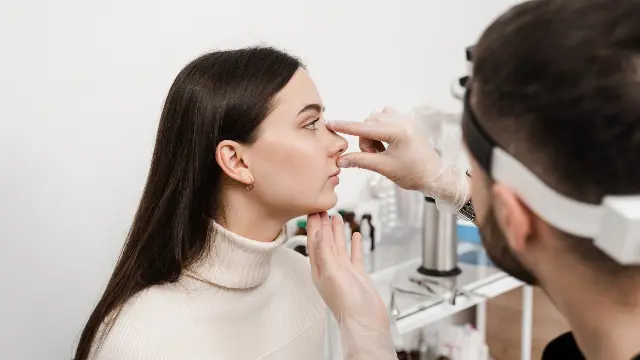
Step 1 Submit Your Case for Pre-Consultation Review
Before your consultation is scheduled, Baroko asks that you submit a case file that Dr. Kim reviews personally prior to the call. This file should include current photographs from the front, profile, three-quarter, and base views; the operative report from your primary rhinoplasty if it is available; post-operative photos at three and six months from the original procedure; and a brief written description of your specific concerns and the outcome you are hoping to achieve.
Dr. Kim's review of this material before your consultation call ensures that the session is clinically productive from the first minute no time is spent on background that has already been assessed. This pre-review step is how Baroko makes every consultation count.
Step 2 Virtual Consultation with Dr. Kim
Your consultation is a 30 to 45 minute video call via Zoom or Google Meet, conducted directly with Dr. Kim. The session covers his assessment of your specific revision needs based on the submitted case file, the proposed surgical approach and techniques, candidacy confirmation, a realistic discussion of achievable outcomes and limitations, and practical logistics including recommended stay duration and proposed surgery date options.
Following the consultation, you receive a written treatment summary, an itemized cost estimate, and a proposed timeline. There is no pressure to book during or after the consultation. This is an information and assessment session first, and the decision to proceed is entirely yours to make on your own timeline.
Contact Information
📞 Phone:
💬 WhatsApp: Click Here
📧 Email:
🌐 Website: https://www.barokoplasticsurgery.com
📍 Location: Baroko Plastic Surgery, Seocho-gu, Seoul, South Korea
🕐 Hours: From Monday 10:00am - 7:00pm Tuesday 10:00am - 7:00pm Wednesday 10:00am - 7:00pm Thursday 10:00am - 7:00pm Friday 10:00am - 7:00pm Saturday 10:00am - 4:00pm Sunday Closed
Frequently Asked Questions
How Long After My First Rhinoplasty Should I Wait Before Getting Revision Rhinoplasty?
The clinical minimum is 12 months, as nasal swelling can persist and partially mask the final structural result for up to 18 months after primary surgery. For most complication types, the optimal window for revision rhinoplasty is 14 to 18 months post-primary procedure. For contracted nose correction, waiting 18 to 24 months is advisable to allow full tissue maturation. If you are already three or more years post-primary surgery, there is no clinical reason to wait any further your second surgery can be planned immediately.
Can Revision Rhinoplasty Fix Both My Breathing Problems and Cosmetic Issues in One Surgery?
Yes, in most cases. One of the specific advantages of an ENT-trained revision rhinoplasty surgeon is the ability to perform functional rhinoplasty addressing nasal valve correction, septal deviation, or internal structural collapse simultaneously with cosmetic correction of asymmetry, tip shape, or dorsal irregularity. This dual-competency approach is what makes revision rhinoplasty at Baroko distinct from practices that treat breathing and aesthetics as separate procedures requiring separate surgeries.
How Much Does Revision Rhinoplasty Cost in Seoul Compared to the United States?
Revision rhinoplasty in Seoul at Baroko typically ranges from $8,000 to $13,000 all-in for surgery, depending on whether ear or rib cartilage is required. In the United States, equivalent revision procedures commonly range from $20,000 to $35,000 when surgeon fees, anesthesiologist fees, facility fees, and follow-up costs are totaled. When flights and Seoul accommodation are added, the total trip investment for a second surgery at Baroko remains 40 to 50 percent below the average US total with equivalent or superior specialist credentials.
Is Rib Cartilage Harvest Painful What Does Recovery Feel Like?
The harvest is performed through a small incision in the lower chest crease. In the immediate post-operative period, patients experience moderate chest soreness managed with prescribed analgesics for five to seven days. By day four or five, discomfort is significantly reduced. By day seven to ten, the harvest site is largely no longer the primary focus of recovery. Revision rhinoplasty with rib cartilage rhinoplasty involves a slightly longer overall recovery timeline than ear cartilage cases, but most patients describe the harvest discomfort as manageable and less intense than expected.
Can a Contracted Nose Be Fully Corrected Through Revision Rhinoplasty?
In most cases, significant and durable improvement is achievable through contracted nose revision performed by a specialist with specific experience in this complication. The degree of correction depends on the severity of contracture, the quantity of available graft material, and the state of the skin envelope. Full anatomical restoration to a pre-primary state is not always possible, but correction that produces a natural appearance and restored nasal function is achievable in the majority of cases that Dr. Kim treats. Realistic outcome expectations are discussed in full during the pre-consultation case review.
How Do I Know If My Unsatisfactory Rhinoplasty Result Is from Swelling or a Real Structural Problem?
If you are fewer than 12 months post-primary surgery, some degree of ongoing swelling is still possible, and waiting for full resolution is clinically advisable before concluding that your result requires correction. If you are more than 14 to 18 months post-surgery and your concerns include fixing bad results such as persistent asymmetry, breathing difficulty, a visible implant edge, or progressive nasal tightening, these are structural problems not healing artifacts. An independent ENT assessment will confirm this. Rhinoplasty complications that appear or persist beyond the 18-month mark do not resolve on their own.
Does Dr. Kim Personally Perform Every Revision Rhinoplasty Surgery at Baroko?
Yes, without exception. Dr. Kim performs every revision rhinoplasty that he consults on personally. There is no delegation to junior surgeons or associates at any stage of the operation. Baroko operates as a single-surgeon practice by design, and the surgeon you meet in consultation is the surgeon who will be operating. This is Baroko's explicit commitment and is central to the clinic's standard of care.
How Long Do I Need to Stay in Seoul for Revision Rhinoplasty?
Baroko recommends a stay of 12 to 14 nights in Seoul for revision rhinoplasty patients. This allows for the initial recovery period, scheduled post-operative check-ups during the first week, splint removal if applicable, and clearance from Dr. Kim before the patient returns home. After returning to the United States, ongoing virtual follow-up consultations are provided as part of Baroko's standard post-operative care commitment.
When Can I Return to Exercise After Revision Rhinoplasty with Rib Cartilage?
Light daily activity can typically be resumed at three to four weeks post-surgery. Return to gym training and high-intensity exercise, including cardiovascular exercise and weightlifting, is generally cleared at six to eight weeks following revision rhinoplasty with rib cartilage harvest. Individual timelines vary based on the complexity of the procedure and the pace of healing, and Dr. Kim provides specific clearance guidance at each post-operative check-up during the Seoul stay and through virtual follow-up after return.
What Documents Should I Send to Baroko Before My Revision Rhinoplasty Consultation?
Before your consultation is scheduled, please submit current photographs from the front, profile, three-quarter, and base angles; the operative report from your primary rhinoplasty if you have access to it; post-operative photos from the original procedure at three and six months if available; any three-dimensional CT imaging that has been obtained; and a written description of your specific concerns and goals. This case file for your second surgery is reviewed personally by Dr. Kim before the call, ensuring that the consultation is immediately clinically productive.
Conclusion
Revision rhinoplasty is a specialized procedure that demands a surgeon with proven expertise in structural reconstruction, functional repair, and the unique challenges of operating on a previously altered nasal anatomy and choosing the right specialist is the single most important variable in whether the correction succeeds or compounds the original problem. The ideal timing for most revision cases is 12 to 18 months post-primary surgery, and for patients who are three years post-primary, there is no clinical reason for further delay.
Dr. Jun Kim's ENT training and more than 20 years of dedicated rhinoplasty practice including complex contracted nose correction, nasal valve repair, and rib cartilage reconstruction performed at Baroko Plastic Surgery in Seoul make this clinic uniquely suited for American patients seeking correction of failed domestic rhinoplasty outcomes. Baroko's implant-free, autologous cartilage philosophy eliminates the root cause of the majority of revision cases and produces structural results that are biologically permanent.
If you had a rhinoplasty that left you with a nose that does not breathe right, does not look right, or both revision rhinoplasty performed by the right specialist is not a gamble. It is a clinically sound path to the outcome you deserved the first time. Contact Baroko Plastic Surgery today to submit your case for a personal review by Dr. Jun Kim the first step is simply sharing your photos and your story. Your consultation is a direct conversation with the surgeon who will perform your revision, not a coordinator script. Take the first step toward the result you were promised.
About the Author
Dr. Jun Kim Board-Certified ENT Specialist and Chief Director, Baroko Plastic Surgery
Dr. Jun Kim is the Chief Director of Baroko Plastic Surgery in Gangnam-gu, Seoul, South Korea, with over 20 years of clinical and surgical experience in rhinoplasty and functional nasal surgery. He has performed thousands of rhinoplasty procedures throughout his career, including hundreds of complex revision cases involving contracted nose correction, nasal valve repair, and rib cartilage reconstruction. Dr. Kim holds board certification as an ENT specialist in otolaryngology and serves as Adjunct Professor at Samsung Medical Center. He is a member of multiple Korean plastic surgery and rhinology professional societies. His clinical specialty is implant-free, autologous cartilage rhinoplasty and complex revision rhinoplasty.
For consultations : | | WhatsApp
More Articles
Continue reading our clinical guides.
Types of Rhinoplasty: All Techniques Explained | Baroko
Explore every type of rhinoplasty open, closed, non-open, revision and implant-free explained by Dr. Jun Kim, Seoul ENT rhinoplasty expert with 20+ years.
Learn MoreRhinoplasty Results Timeline: Month 1 to Year 1 Complete Guide
Detailed month-by-month rhinoplasty results guide. See when swelling subsides, when to expect final results, and what natural outcomes look like.
Learn MoreMale Rhinoplasty In Seoul: Natural And Masculine Results | Baroko
Seeking a masculine, natural result? Expert rhinoplasty for men in Seoul by Dr. Jun Kim. ENT led, implant free techniques for breathing and aesthetics. Book your Zoom consult.
Learn More