Personalized Medical Care & Dedicated International Patient Concierge
Medical Guide
Rhinoplasty Before After Photos 200 Plus Patient Results
View 200 plus rhinoplasty before after photos from Baroko Plastic Surgery. Explore implant free results and revision nose surgery by expert Dr Jun Kim in Seoul.
Schedule a Consultation
Rhinoplasty Before and After Photos: 200 Plus Real Patient Transformations
For many patients in New York or Los Angeles, the journey to a new profile begins with a single question: what is actually possible for my nose? Searching through thousands of rhinoplasty before after photos is more than just a visual exercise. It is the search for a surgeon who understands the unique architecture of your face and can deliver results that look natural rather than operated on. Choosing to travel to Seoul for surgery is a major decision that requires the highest level of visual proof and clinical transparency.
Most online galleries offer a limited view of nasal surgery, often omitting complex revisions or specific ethnic considerations. This lack of transparency can leave patients feeling anxious about whether a surgeon can handle their specific structural needs or provide a natural implant free result. At Baroko Plastic Surgery, we believe that a comprehensive gallery of rhinoplasty before after photos should serve as an educational tool that empowers you to make an informed choice based on real world evidence and anatomical similarity.
By the end of this guide, you will understand how to navigate our extensive gallery to find cases that match your unique nose type. We will cover the science behind Dr Jun Kim’s autologous cartilage particle technique and how it differs from traditional methods. You will also see specific results for revision rhinoplasty, contracted nose correction, and ethnic nasal refinement. Our goal is to provide you with the clarity needed to set realistic expectations for your own surgical outcome.
As a board certified ENT specialist with over 20 years of experience and a focus on functional aesthetic harmony, I have performed over 4,000 rhinoplasty procedures. At Baroko, we prioritize long term safety using your own tissue rather than synthetic implants.
Analyzing Our Rhinoplasty Before After Photos Gallery
Rhinoplasty before after photos are standardized clinical images that document the transformation of the nose from multiple angles to show both aesthetic and structural changes. These images help patients visualize potential outcomes by comparing their current nasal anatomy with similar cases treated by a specialist. Our gallery serves as a primary resource for establishing realistic surgical goals.
Navigating a gallery containing hundreds of images can feel overwhelming without a clear strategy. To get the most value from these photos, you should look for patients who share your "before" characteristics. This includes skin thickness, bridge height, and tip shape. When you find a match in our gallery, you can see how Dr Jun Kim addressed those specific challenges to create a balanced profile.
Categorizing Results By Anatomical Concern
We have organized our gallery into specific categories to help you find relevant cases quickly. One of the most common categories is the bulbous tip correction. In these photos, you can see how refined tip projection is achieved without making the nose look pinched. Another major category is humped bridge reduction, where the goal is a smooth, straight dorsal line that looks natural from the profile view.
Matching your before state is the best predictor of your after result. For example, if you have a wide nasal base, looking at photos of patients with similar width will show you how base reduction surgery can narrow the nostrils while maintaining proper breathing function. This targeted approach to viewing rhinoplasty before after photos prevents the common mistake of expecting a result that is anatomically impossible for your specific bone structure.
Understanding Different Photographic Angles
A professional gallery must include at least three specific angles: the frontal view, the profile view, and the basal view. The frontal view shows the symmetry of the nose and the width of the bridge. The profile view is essential for seeing the bridge height and the tip rotation. The basal view, taken from below the nostrils, shows the projection of the tip and the straightness of the septum.
Spotting natural looking nasal tip projection requires a careful look at the profile and oblique angles. A well performed surgery will show a tip that is supported and defined but does not look like a separate piece attached to the face. By examining these angles in our rhinoplasty before after photos, you can verify that the results are consistent and structurally sound from every perspective.
Realism In Clinical Photography
Transparency is the foundation of patient trust. We ensure that all clinical photography is taken with consistent lighting and background to avoid misleading the viewer. Shadows can often hide imperfections, which is why we use high definition cameras and professional medical lighting. This allows you to see the true texture of the skin and the subtle contours of the new nasal shape.
As Dr Jun Kim often states, a transparent gallery shows the nose in all angles, not just the best one. We want our patients to see the structural integrity of the result. This honest approach is why patients from Los Angeles and New York City trust our digital gallery as a reliable source of truth. When you view our rhinoplasty before after photos, you are seeing the actual clinical outcomes of thousands of hours in the operating room.
Why Visual Proof Matters In Nose Surgery
Visual proof in rhinoplasty is the collection of clinical evidence, including photographs and diagnostic scans, that demonstrates a surgeon's ability to achieve consistent and safe results. It serves as a bridge of trust between the patient's aesthetic desires and the surgeon's technical capabilities. Accurate visual documentation is essential for pre operative planning and post operative evaluation.
The clinical significance of before after documentation goes beyond simple aesthetics. It is a record of how the nose heals over time. In our practice, we correlate these photos with internal data to ensure that the beauty seen on the outside is supported by healthy anatomy on the inside. This is especially important for patients who have breathing issues or structural deformities.
Beyond The Surface The Role Of 3D CT Scans
A 3D CT scan is a diagnostic imaging tool that provides a three dimensional view of the nasal bones, cartilage, and soft tissues to identify internal obstructions or structural weaknesses. This technology allows Dr Jun Kim to see exactly what is happening inside the nose before the first incision is made. By linking our rhinoplasty before after photos with these scans, we provide a full picture of the transformation.
Ensuring that the after photo is matched by internal health is our top priority. We use 3D CT diagnostics to verify that the airway is clear and the septum is straight. This functional aesthetic harmony is the hallmark of an ENT specialist led clinic. Patients can feel confident knowing that their new nose will not only look better but will also function better than it did before.
Establishing Trust With High Volume
Volume is a key indicator of surgical expertise. Performing over 200 rhinoplasties every year allows Dr Jun Kim to refine his techniques and handle a wide variety of complex cases. When you see 200 plus cases in our gallery, you are seeing a representative sample of a high volume practice. This consistency is what separates an occasional rhinoplasty surgeon from a dedicated specialist.
A small portfolio of ten images can be cherry picked to show only the perfect results. However, a gallery of hundreds of rhinoplasty before after photos shows a surgeon's ability to handle different ethnicities, age groups, and revision cases. This high volume of proof is a benchmark for consistency that gives our international patients peace of mind during their journey to Seoul.
Revision Rhinoplasty Results And Complex Corrections
Revision rhinoplasty results are the documented outcomes of secondary or tertiary nasal surgeries performed to correct issues from a previous operation. These cases often involve the removal of scar tissue, reconstruction of collapsed structures, and the replacement of synthetic implants with natural cartilage. Success in revision surgery requires advanced surgical skill and specialized techniques.
Revision patients often come to us with a high level of anxiety. They may have had one or more failed surgeries and are looking for a final solution. Our gallery of revision rhinoplasty results highlights our ability to restore both the form and function of the nose even in the most difficult circumstances. We focus on rebuilding the foundation of the nose to ensure a stable and beautiful long term result.
Correcting The Contracted Short Nose
A contracted nose is a condition where the nasal tissues have scarred and shrunk, causing the nose to appear unnaturally short and often upturned. This is frequently a complication from previous surgeries involving synthetic implants or infections. Lengthening a contracted nose is one of the most challenging procedures in plastic surgery because it requires releasing internal scar tissue and providing strong structural support.
In our revision gallery, you can see the results of lengthening the nasal tip using autologous cartilage. This technique brings the tip down to a more natural position and restores the proper length of the nose. By using the patient's own tissue, we reduce the risk of further contraction and provide a result that remains stable for years. These rhinoplasty before after photos show the dramatic impact that a successful revision can have on a patient's appearance and self esteem.
Removing Synthetic Implants Safely
Many patients seek revision surgery to remove synthetic materials like silicone or Gore Tex. While these materials are commonly used, they can sometimes cause inflammation, thinning of the skin, or extrusion. Our gallery focuses on patients who have successfully transitioned from synthetic implants to natural tissue. This "implant free" approach is a specialty of Dr Jun Kim.
Addressing the risks of synthetic materials requires a surgeon who understands how the body reacts to foreign objects. By replacing an artificial bridge with autologous cartilage particles, we can achieve a smooth and natural profile that is biologically compatible with the body. The rhinoplasty before after photos in this section demonstrate how the skin can heal and thicken once the irritating synthetic material is removed.
Case Study Secondary Septal Reconstruction
Secondary septal reconstruction is the process of repairing a previously operated septum that remains deviated or has been over resected. This often involves using rib cartilage to provide the necessary support for a straight and functional nose. Our functional septoplasty results show how we can correct breathing issues while simultaneously improving the appearance of the nose.
| Issue | Primary Surgery Failure | Baroko Revision Technique |
|---|---|---|
| Bridge Shape | Collapsed or Saddle Nose | Rib Cartilage Reconstruction |
| Breathing | Obstructed Nasal Valve | Functional Septoplasty |
| Nasal Tip | Pinched or Asymmetric | Cartilage Particle Reshaping |
Achieving Natural Ethnic Rhinoplasty Results
Ethnic rhinoplasty results are surgical outcomes that enhance the nasal features of patients from diverse backgrounds while respecting and preserving their unique cultural identity. This specialized approach avoids a westernized look and instead focuses on refining the patient's natural anatomy. Success is measured by how well the new nose harmonizes with the rest of the facial features.
Targeting specific aesthetic goals for our diverse patient population requires a nuanced understanding of different nasal structures. Patients from New York or Los Angeles often seek a surgeon who can provide refinement without loss of heritage. Our gallery shows a wide range of ethnic results that highlight our commitment to natural beauty and anatomical respect.
Low Bridge Augmentation For Asian And African American Patients
Building a nasal bridge for patients with a naturally low radix requires a delicate touch. Using autologous cartilage particles allows Dr Jun Kim to build the bridge incrementally. This ensures that the transition from the forehead to the nose is smooth and natural. We avoid the "stuck on" look that can occur when a solid synthetic block is placed under thin skin.
Avoiding the "avatar" look is a primary concern for our patients. This occurs when the bridge is started too high up on the forehead. By carefully placing cartilage particles, we can control the height of the bridge with extreme precision. The rhinoplasty before after photos of our augmentation cases show a subtle yet impactful change that looks like the patient was born with that profile.
Refining The Bulbous Tip Naturally
A bulbous tip is characterized by excess volume in the lower part of the nose, often due to wide cartilage or thick skin. Refining this area involves thinning the soft tissue and repositioning the underlying cartilages to create more definition. This must be done carefully to ensure that the airway remains open and the tip looks soft rather than sharp.
Dr Jun Kim emphasizes that ethnic rhinoplasty is about refinement, not replacement. We aim to enhance the patient's features while maintaining their identity. Our technical breakdown of tip refinement includes the use of cartilage grafts to provide support and shape. The results seen in our rhinoplasty before after photos for bulbous tips show a clear improvement in definition and symmetry across all patient types.
The Baroko USP Implant Free Rhinoplasty Before After Photos
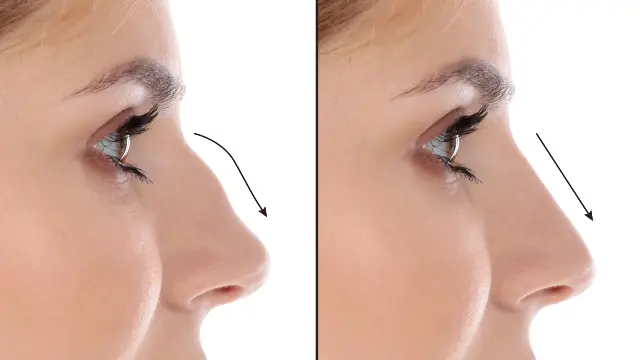
Implant free rhinoplasty is a surgical technique that uses only the patient's own biological tissues, such as cartilage and fascia, to reshape the nose without any synthetic materials. This approach eliminates the risk of implant rejection and provides a more natural look and feel. It is the preferred method for patients seeking the highest level of safety and long term stability.
The unique technique developed by Dr Jun Kim involves the use of autologous cartilage particles. This method is a significant advancement over traditional solid cartilage grafts. By dicing the cartilage into tiny particles, we can mold the shape of the nose with greater flexibility. This section of our gallery highlights the superior results that can be achieved when you move away from artificial fillers.
What Are Autologous Cartilage Particles
Autologous cartilage particles are small pieces of the patient's own ear or rib cartilage that are processed and used as a natural filler for nasal contouring. This technique allows for a smooth application that mimics the natural feel of the nasal bridge and tip. It is particularly effective for smoothing out minor irregularities and providing a seamless transition between the bone and cartilage.
Detailed explanation of harvesting involves taking a small amount of tissue from a donor site on the patient's own body. This ensures that the material is 100 percent biocompatible. Because the particles are tiny, they do not have the sharp edges that can sometimes be seen with solid grafts as the skin thins over time. This prevents the "visible graft" look that many patients fear when they view older rhinoplasty before after photos.
Long Term Stability In Results
One of the greatest advantages of using natural tissue is its long term stability. Unlike synthetic implants, which can shift or cause bone erosion over decades, autologous tissue integrates with the surrounding nasal structures. Our gallery includes photos of patients several years after their surgery to demonstrate this permanence.
Natural tissue integrates better than synthetic materials because it becomes a living part of the nose. This means the results actually improve as the swelling fully resolves and the tissues settle. Why settle for a temporary fix when you can have a lifelong solution? Our long term rhinoplasty before after photos are the ultimate proof of the durability and safety of the Baroko approach.
The Journey From Consultation To Recovery Photos
The recovery journey is the chronological healing process that follows rhinoplasty, beginning with the initial postoperative phase and ending when the final nasal shape is fully realized. Understanding this timeline through visual evidence helps patients manage their expectations and plan their daily activities. Most patients see significant changes in the first few months, but final healing takes a full year.
Managing expectations for the healing process is a critical part of our patient care. We use our gallery to show what the nose looks like at different stages of recovery. This helps reduce anxiety during the early weeks when swelling is at its peak. By seeing how other patients progressed, you can feel more confident in your own healing journey.
The First Seven Days Casts And Swelling
The first week after surgery is often called the "ugly duckling" phase. Patients will have a protective cast on their nose and may experience bruising and swelling around the eyes. This is a normal part of the body's healing response. We use recovery capsule therapy at Baroko to help speed up this process and reduce inflammation as quickly as possible.
Visualizing this phase helps patients prepare for the immediate postoperative period. While you won't see your final result on day seven, you will see the general shape of your new nose when the cast is removed. Our gallery includes images of the "cast off" day to show patients that even though they are still swollen, the improvement is already visible.
The Three Month Transformation
By the three month mark, about 70 percent of the surgical swelling has usually subsided. This is the stage where patients begin to see the true refinement of the bridge and tip. However, the skin is still thickening and the internal tissues are still maturing. It is important to remember that a "photo ready" nose is a work in progress.
| Timeline | Sensation | Visual Result |
|---|---|---|
| Week 1 | Congestion and Tightness | Cast removal, initial bruising |
| Month 1 | Occasional Numbness | Significant swelling reduction |
| Month 6 | Returning Sensitivity | Refined tip and bridge definition |
Why does it take a year for final results? The nasal tip is the last area to settle because it has the thickest skin and the most complex cartilage structure. Our gallery shows the subtle differences between a 3 month and a 12 month result to emphasize the importance of patience. These rhinoplasty before after photos serve as a reminder that the best results are worth the wait.
Why Choose Baroko Plastic Surgery For Rhinoplasty
Choosing the right clinic for your nose surgery involves evaluating the surgeon's experience, the clinic's technology, and the support provided for international patients. Baroko Plastic Surgery stands out as a premier destination in Seoul for those seeking expert ENT led rhinoplasty. We provide a comprehensive approach that prioritizes your health and aesthetic goals equally.
Dr Jun Kim's expertise is grounded in over two decades of specialized practice. He has performed over 4,000 procedures, with an annual volume of 200 plus rhinoplasties. This deep experience allows him to handle even the most complex primary and revision cases. As an adjunct professor at Samsung Medical Center, he remains at the forefront of surgical innovation and medical education.
Our difference lies in our commitment to implant free results. We use 3D CT diagnostics and endoscopic nasal evaluations to create a surgical plan that is unique to your anatomy. This individualized approach ensures that your results are not only beautiful but also structurally sound. We are one of the few clinics in Korea dedicated to the autologous cartilage particle technique for a more natural and safer outcome.
For our patients traveling from New York City or Los Angeles, we offer dedicated international support. This includes English speaking coordinators who assist with every step of the process. We provide virtual consultation suites so you can meet Dr Kim before you fly. Our team also helps with airport pickups and local accommodation to ensure your stay in Gangnam is as comfortable and stress free as possible.
How To Book Your Rhinoplasty Consultation
Booking your consultation is the first active step toward your transformation. We have streamlined this process for our global audience to remove any friction. Whether you are in the United States or elsewhere, you can begin your journey with a simple online inquiry. Our team is ready to guide you through the initial assessment and planning phases.
Step 1 Schedule Your Free Virtual Consultation
Our virtual consultation is ideal for USA based patients. During this session, you will provide photos of your nose from different angles for a preliminary assessment. Dr Jun Kim will review your case and discuss your goals, the recommended technique, and the expected outcomes. This allows you to get expert advice from the comfort of your home in NYC or LA.
To book, you can contact us via WhatsApp or through our website's inquiry form. We will coordinate a time that works for your time zone. This initial meeting is a great opportunity to ask questions about our rhinoplasty before after photos and learn more about our specific approach to your nose type.
Step 2 Personalized Surgical Planning
Once you arrive in Seoul, you will have an in person consultation that includes a 3D CT scan and an endoscopic nasal exam. This high tech diagnostic phase is where the final surgical design is created. You will work closely with Dr Kim to finalize the plan before your procedure.
Contact Information
📞 Phone:
💬 WhatsApp: Click Here
📧 Email:
🌐 Website: https://www.barokoplasticsurgery.com
📍 Location: Baroko Plastic Surgery, Seocho-gu, Seoul, South Korea
🕐 Hours: From Monday 10:00am - 7:00pm Tuesday 10:00am - 7:00pm Wednesday 10:00am - 7:00pm Thursday 10:00am - 7:00pm Friday 10:00am - 7:00pm Saturday 10:00am - 4:00pm Sunday Closed
Conclusion
Viewing 200 plus rhinoplasty before after photos is the first step toward reclaiming your confidence and improving your nasal function. These images are not just a portfolio of work; they are a testament to the possibilities of modern surgical art and science. Whether you are seeking a primary enhancement or a complex revision, seeing real transformations helps bridge the gap between your current appearance and your aesthetic goals.
At Baroko Plastic Surgery, we understand that the decision to undergo nose surgery is deeply personal. Our commitment to using autologous cartilage techniques ensures a natural and long lasting result that prioritizes your safety. With over 20 years of specialized ENT experience, Dr Jun Kim provides the clinical precision required for both breathing and beauty. We use the latest technology to ensure your journey is documented and planned with extreme care.
We hope these rhinoplasty before after photos help you visualize your potential results and feel empowered in your decision making process. Consistency, transparency, and expertise are the pillars of our practice. When you choose Baroko, you are choosing a clinic that values your health as much as your appearance. Every transformation in our gallery represents a patient who trusted us with their profile and walked away with a result they love.
Ready to see what is possible for your profile? Book a free virtual consultation today and join the thousands of patients who have transformed their lives at Baroko. Our team is here to support you every step of the way, from your first click to your final follow up. Let us help you achieve the balanced and natural look you deserve through the power of expert rhinoplasty and natural tissue reconstruction.
About the Author
Dr. Jun Kim Chief Director of Baroko Plastic Surgery
Dr. Jun Kim has over 20 years of experience and has performed more than 4000 procedures. He is a board certified ENT specialist and a member of leading Korean plastic surgery and rhinology societies. He specializes in natural implant free nasal reconstruction.
For consultations : | | WhatsApp
More Articles
Continue reading our clinical guides.
Types of Rhinoplasty: All Techniques Explained | Baroko
Explore every type of rhinoplasty open, closed, non-open, revision and implant-free explained by Dr. Jun Kim, Seoul ENT rhinoplasty expert with 20+ years.
Learn MoreRhinoplasty Results Timeline: Month 1 to Year 1 Complete Guide
Detailed month-by-month rhinoplasty results guide. See when swelling subsides, when to expect final results, and what natural outcomes look like.
Learn MoreMale Rhinoplasty In Seoul: Natural And Masculine Results | Baroko
Seeking a masculine, natural result? Expert rhinoplasty for men in Seoul by Dr. Jun Kim. ENT led, implant free techniques for breathing and aesthetics. Book your Zoom consult.
Learn More